














Quick Answer: A reddish rash over the front of the neck and upper chest developing over a day may represent allergic contact dermatitis — commonly triggered by perfumes, cosmetics, sunscreens, jewellery, hair products, or clothing materials — though the appearance isn't entirely specific and other causes need consideration. Key clues: recent new products (perfume, cream, sunscreen, necklace, detergent) and itching or burning. Until the cause is clear: stop recently introduced products and fragrances, moisturise gently, avoid scratching and harsh soaps — and seek dermatologic evaluation if the rash spreads, becomes painful, or persists.
Case Snapshot: A patient reported a rash spreading rapidly since yesterday — images showed a reddish eruption over the front of the neck and upper chest that had developed gradually over the past day. The distribution — exactly where perfume is sprayed, necklaces sit, and hair products drip — immediately raises the contact-allergy question, while honest clinical thinking keeps the differential open.
Why the Neck and Chest Point to Contact
The front of the neck and upper chest form one of dermatology's most exposure-dense zones: perfumes and body sprays land here first and concentrate; necklaces and pendants (nickel being the classic allergen) rest here for hours; hair products — dyes, serums, shampoos — rinse and drip down here; sunscreens and cosmetics are applied here; and clothing materials, collars, and their detergent residues rub here all day. Allergic contact dermatitis — a delayed immune reaction to a substance touching the skin — characteristically produces an itchy, red rash localized to the area of exposure, which is exactly the geography on display.
The Honest Caveat
As the original assessment noted: the appearance is not entirely specific, and other causes may need consideration depending on history. A one-day evolving neck-chest redness can also represent irritant reactions, photosensitive eruptions (this zone is sun-exposed), heat- and sweat-related rashes, early viral rashes, and more. This is why the history — not the photo — usually makes this diagnosis.
The Questions That Crack the Case
Important clues to ask about:
- A recently introduced perfume, cream, sunscreen, necklace, or detergent — "new in the last days to weeks," since contact allergy can take repeated exposures to declare itself
- Itching or burning in the rash — allergy typically itches insistently
- Timing patterns: worse after applying something? After sun? After sweating?
- Anyone else in the household affected (pointing away from allergy, toward infestations or infections)?
Patients rarely volunteer the crucial detail — the new fragrance, the artificial-jewellery necklace worn to one event — until asked directly. Auditing the last two weeks of everything that touched the area is the diagnostic act.
The Interim Plan — Until the Cause Is Clear
- Avoid recently introduced skin products or fragrances — pause everything new; you can reintroduce singly later
- Use a gentle moisturiser to support the inflamed barrier
- Avoid scratching and harsh soaps — both deepen the inflammation and invite infection
- Remove jewellery from the area; switch to soft, washed cotton clothing; keep the zone sun-protected while it settles
- Seek dermatologic evaluation if the rash spreads, becomes painful, or persists
When Detective Work Goes Formal
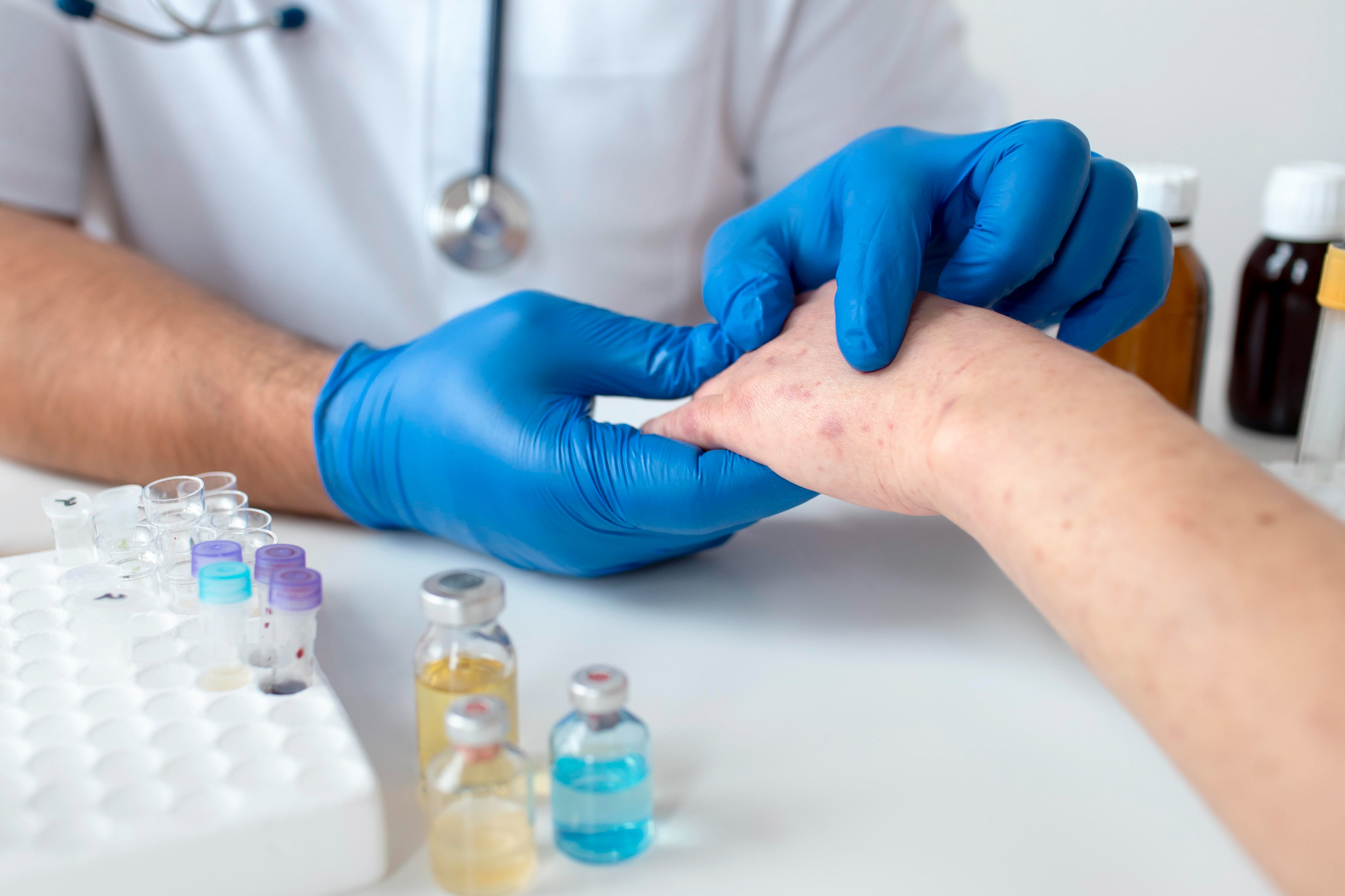
If the rash settles with avoidance but returns with re-exposure — or the culprit stays hidden — patch testing identifies the specific allergen: fragrance mixes, nickel, preservatives, dye chemicals and dozens more are tested systematically on the back and read over days. A named allergen turns a lifetime of mystery rashes into a simple avoidance list — one of dermatology's most satisfying trades.
When to See a Dermatologist
See a dermatologist if the rash is spreading, blistering, painful, or persisting beyond a week of avoidance and gentle care; if it involves the face or eyelids; if episodes keep recurring; or if you're feeling unwell with it — the cue that this may not be contact dermatitis at all. Book an evaluation here.
FAQs
Q: Can a perfume I've used for years suddenly cause allergy? Yes — contact allergy is acquired through repeated exposure, so long-loved products are frequent culprits. "I've always used it" doesn't acquit it.
Q: Should I apply an antiseptic or leftover steroid cream? Neither, unadvised — antiseptics can further irritate, and unguided steroid use muddies the diagnosis. Bland moisturiser and avoidance first; prescriptions after assessment.
Q: How fast should it improve once I remove the trigger? Allergic contact dermatitis typically settles over one to three weeks after exposure stops; faster with prescribed treatment. Non-improvement despite genuine avoidance reopens the differential.
Q: Is gold jewellery safe if artificial jewellery caused this? Usually — nickel in inexpensive alloys is the common allergen. Patch testing confirms it, after which higher-purity metals are typically tolerated.
📌 Case Study Reference: Publicly shared patient images and query, r/DermatologyQuestions, Reddit — "Rash spreading rapidly since yesterday (photos)". Educational discussion only; not a final diagnosis. Clinical commentary by the Allodermis dermatology team.
