
















Clear nails. Clear confidence.
Doctor-led treatment rooted in science.
Nail fungus — onychomycosis — is not just cosmetic. Left untreated it can spread, cause pain, and permanently damage the nail. Our dermatologists specialise in root-cause diagnosis, fungal species identification, and evidence-backed medical treatment that restores nail clarity and prevents recurrence.
Book an Appointment
Get a callback in 5 minutes
Or call 📞 +91 9717503031
What is nail fungus?
A fungal infection of the nail plate, the nail bed, or both — caused by dermatophytes, yeasts or moulds. It typically begins as a white, yellow or brown patch under the nail.
What you notice
- Thickened, brittle nails
- Discolouration — yellow, green, brown or black
- Nail lifting from the nail bed
- Pain while walking
- Foul odour
- Spread to other nails, or to other people
The usual triggers
- Constant moisture exposure
- Tight footwear, occlusion, sweaty feet
- Nail salon infections
- Diabetes, low immunity, poor circulation
- Trauma to nails
- Walking barefoot in gyms, pools and public areas
What happens if it’s left alone
Nail fungus rarely resolves on its own. Untreated, it tends to go one way.
- Severe nail deformity
- Permanent nail loss
- Spread to surrounding skin, including athlete’s foot
- Pain and difficulty wearing footwear
- Recurrence even after superficial home remedies
Early dermatological intervention leads to faster, clearer, safer recovery.
Types of nail fungus we treat
Distal Subungual Onychomycosis
The most common form. Yellowing and thickening that starts at the nail edge.
Proximal Subungual Onychomycosis
Begins at the nail base, and is often linked with low immunity.
White Superficial Onychomycosis
White, chalky patches sitting on the nail surface.
Candida Nails
Common in homemakers. Swollen cuticles alongside soft nails.
What your dermatologist may recommend
Chosen by severity, after diagnosis. Accurate diagnosis means targeted treatment, which means faster healing.
Oral Antifungal Medication
Gold standardClinically proven to clear infection from within. Used when nails are thick, brittle or deeply infected.
- Treats fungus at its root
- Promotes healthy nail growth
Topical Medical Lacquers
For early or mild infectionPrescription antifungal agents formulated to penetrate the nail plate.
- Early infection
- Mild infection
- Prescription only
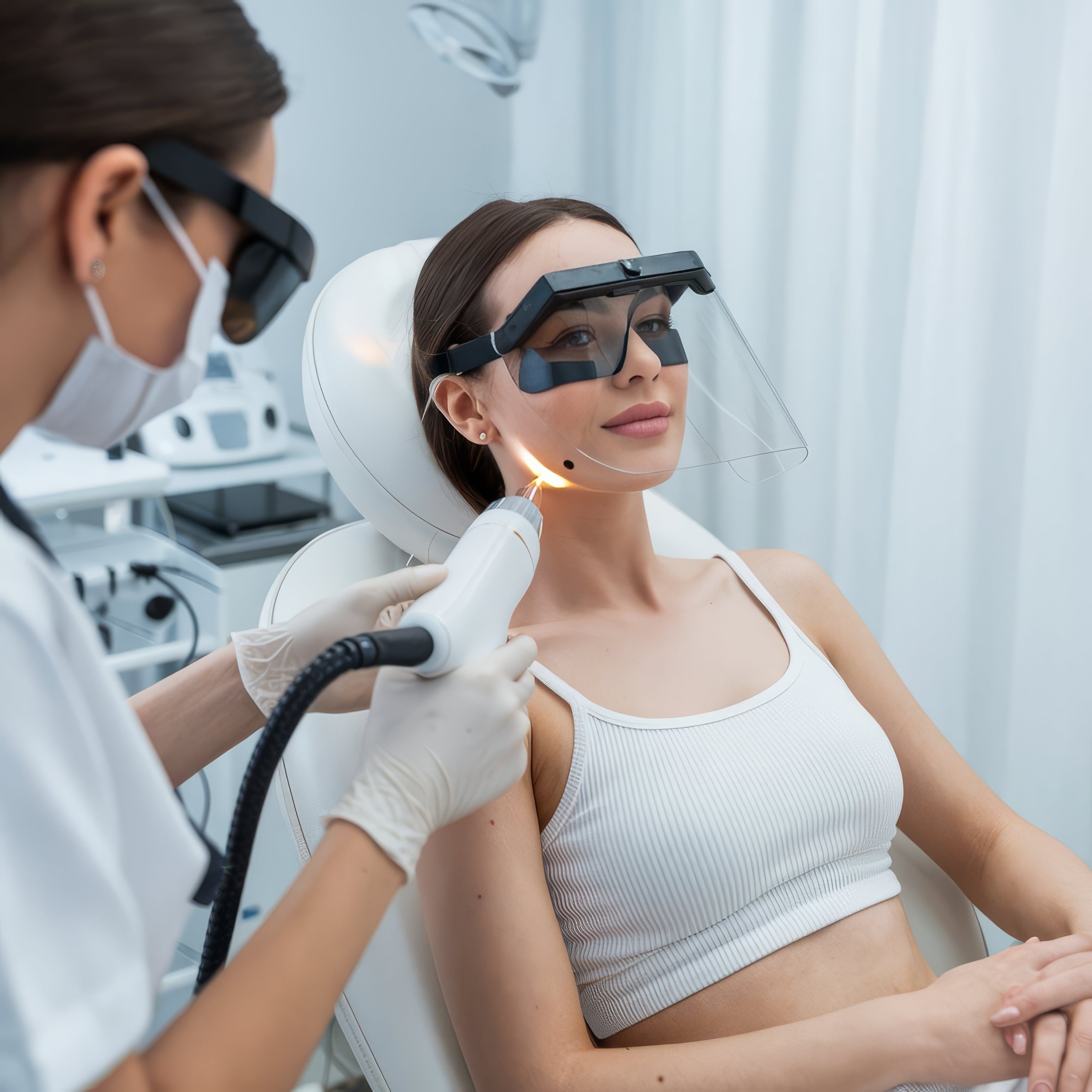
US FDA Approved Laser Therapy
Non-invasiveSafe and painless, and well suited to stubborn or recurrent infections. Speeds up results when combined with medication.
- Stubborn infections
- Recurrent infections
- No downtime
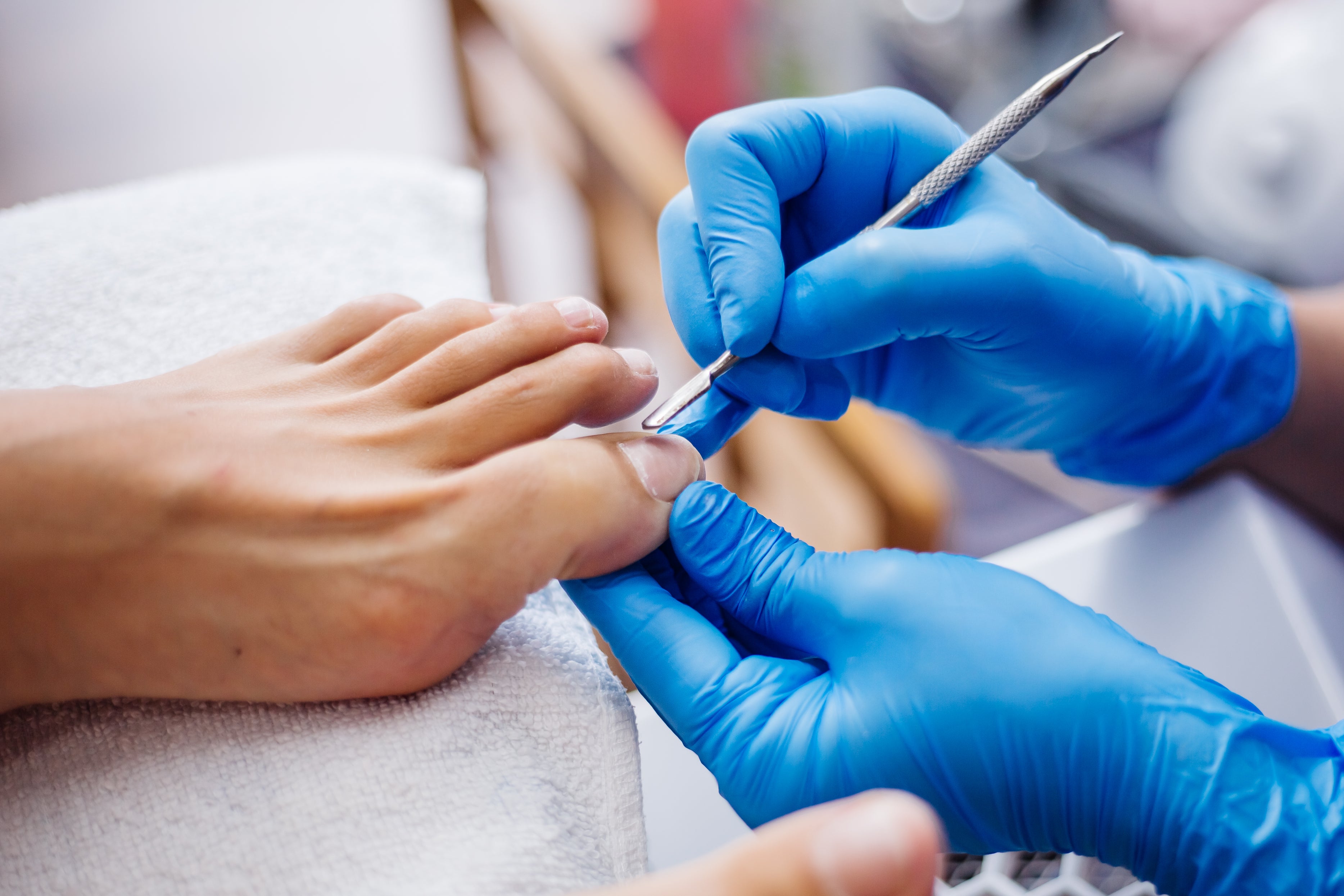
Nail Debridement
Medical nail thinningPerformed when thick, painful nails are physically preventing medication from penetrating.
- Reduces pressure & pain
- Helps antifungals work
- Clinical hygiene protocols
Recurrence Prevention Protocol
Where the cure holds or failsWe correct the triggers that bring the infection back.
- Excess sweating
- Footwear irritation
- Incorrect nail trimming
- Hygiene habits
- Reinfection from family members
Accurate diagnosis, targeted treatment, faster healing — in that order.
Your treatment, step by step
01Root-cause diagnosisDermoscopic and fungal testing+
- Dermoscopic nail imaging
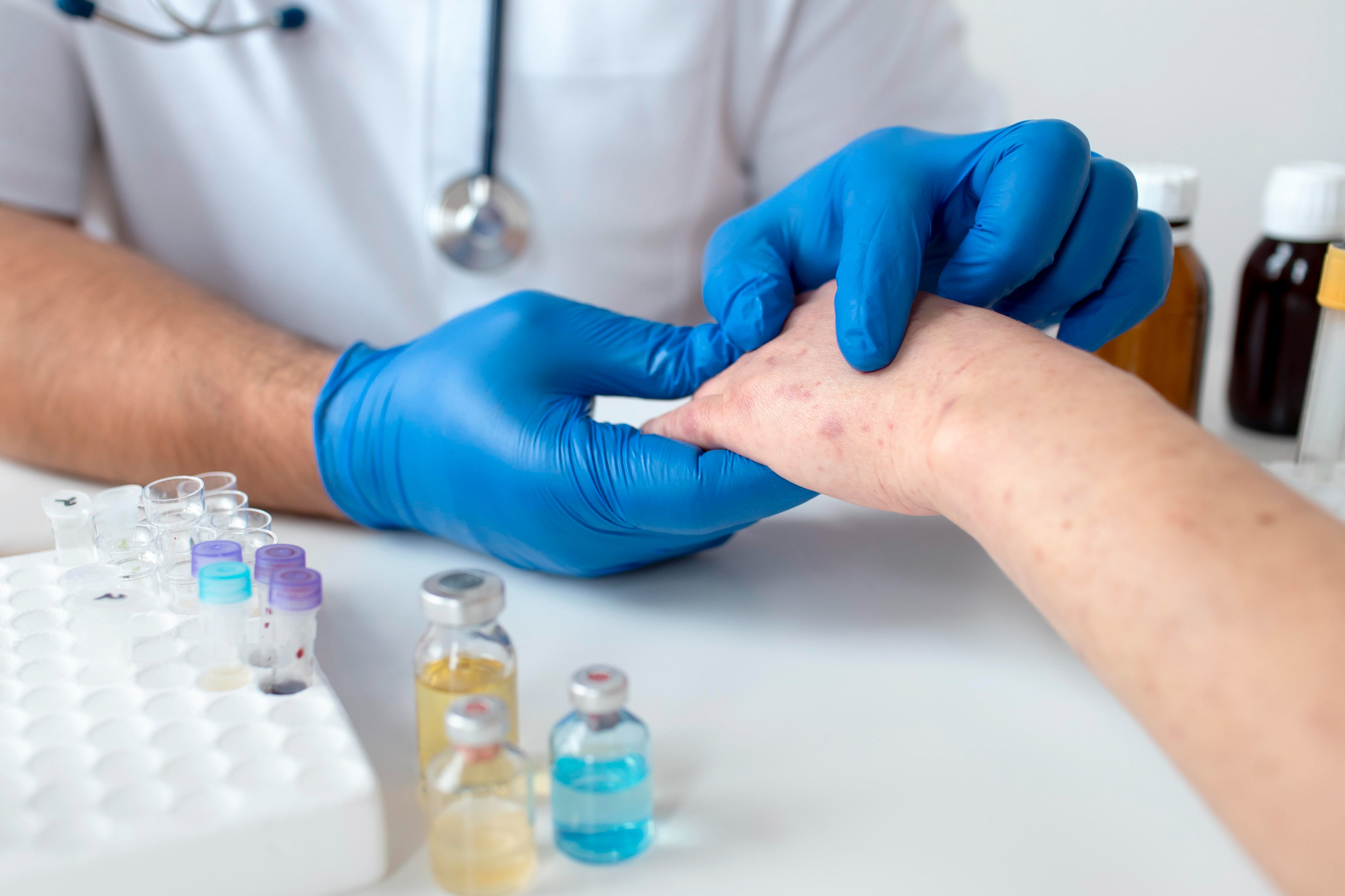
- Nail scraping and KOH fungal test
- Culture, if needed
- Assessment of underlying disease — diabetes, circulation, immune health
- Footwear and hygiene audit
- Medical history and lifestyle assessment
02During treatmentMonthly clinical reviews+
- Oral, topical or laser treatment as prescribed
- Nail thinning, if required
- Hygiene and footwear protocol
- Monthly clinical reviews
03After treatmentGrowth tracking+
- Growth tracking every 2–3 months
- Nail care coaching
- Recurrence-proofing habits
What you can expect
- Reduced thickening
- Less discolouration
- Pain subsides
- Clear new nail begins to appear
- Infection controlled
- Fully grown healthy nail
- Recurrence prevented where guidelines are followed
Toenails grow slowly, so full results depend on your nail growth cycle rather than on the treatment alone.
Nail fungus treatment cost
Cost varies with severity, the number of nails involved, and the therapy chosen.
- Transparent pricing
- No unnecessary tests or upselling
- Doctor-designed plans tailored to severity
Treatment-wise cost
- ✓Topical antifungal therapy — ₹1,000 – ₹2,500 per month
- ✓Oral antifungal medication — ₹2,000 – ₹4,500 per month
- ✓Laser treatment — ₹4,000 – ₹7,500 per session
- ✓Combined therapy packages — ₹8,000 – ₹18,000
Why choose us for nail fungus
AIIMS trained dermatologists
Expertise in nail disorders, fungal infections and resistant cases.
Root-cause diagnostics
We treat the deeper issues — circulation, immunity, sweat patterns — to prevent recurrence.
US FDA approved laser
Safe, precise and effective for stubborn infections.
Clinic-grade infection control
All instruments sterilised to medical protocols. No cross-contamination risk.
Long-term nail health programme
We help you regrow healthy nails and maintain them.
Fungal species identification
Dermatophyte, yeast or mould — the species decides the drug.
Before & after
Questions we hear most often
What is the fastest way to cure nail fungus?
A combination of oral antifungals and laser therapy delivers the fastest and most predictable results.
Can nail fungus spread?
Yes. Untreated fungus spreads to other nails, to surrounding skin, and to family members.
Is laser safe for nail fungus?
Yes — US FDA approved, painless, and with no downtime.
Will the nail look normal again?
As the new nail grows through, clarity returns. How complete that is depends on how much of the nail matrix was damaged before treatment began.
Can home remedies cure nail fungus?
No. The fungus lives deep inside the nail plate, and home remedies cannot reach it.
How long does treatment take?
Three to nine months, depending on nail growth speed and severity.
Free nail assessment and a personalised plan from AIIMS trained dermatologists.
The evidence behind it
- Gupta AK, Stec N, Summerbell RC, et al. Onychomycosis: A Review. Journal of the European Academy of Dermatology and Venereology. 2020;34(9):1972–1990. https://pubmed.ncbi.nlm.nih.gov/32239567/
- Lipner SR, Scher RK. Onychomycosis: Clinical Overview and Diagnosis. Journal of the American Academy of Dermatology. 2019;80(4):835–851. https://pubmed.ncbi.nlm.nih.gov/29959961/
- U.S. Food & Drug Administration. 510(k) Premarket Notification — PinPointe FootLaser for Onychomycosis (K093547); Cutera GenesisPlus (K103626); Q-Clear Nd:YAG Laser (K110370). FDA Device Database. https://www.accessdata.fda.gov/scripts/cdrh/cfdocs/cfpmn/pmn.cfm
Updated on 12 December 2025