















Psoriasis Treatment
Dermatologist-led. Diagnosis first. Evidence-based.
Psoriasis can't be cured, but it can be controlled. Our dermatologists in Bhubaneswar and Delhi build a treatment plan for your type of psoriasis and how severe it is, aiming for clear or nearly clear skin and fewer flares.

A dermatologist-led approach, start to finish.
Not a parlour session. Every plan is shaped by an examination, your history and what the evidence supports.
Diagnosis first
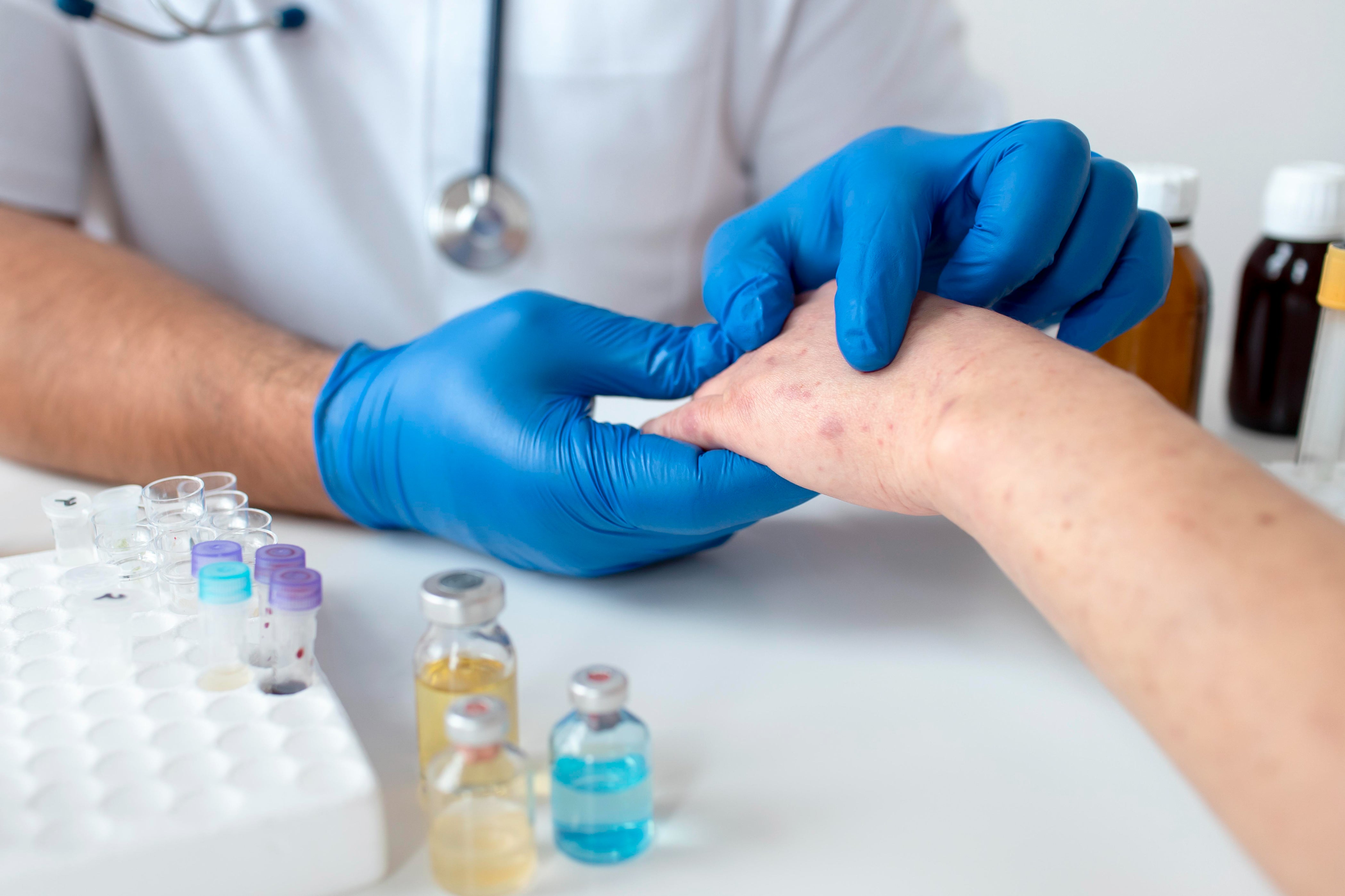
A dermatologist examines your skin, often with dermoscopy, before any treatment is chosen.
Doctor-planned treatment
Every plan is set and supervised by an MD dermatologist, not decided at a reception desk.
Clear plan, no surprises
You hear the number of sessions, the aftercare and what a realistic result looks like before you start.
Follow-up that adjusts
Progress is reviewed at each visit and the plan changes if your skin needs something different.

What is psoriasis?
Psoriasis is a long-term, immune-driven skin condition. Skin cells are normally replaced over about a month; in psoriasis this speeds up to a few days, so cells pile up as thick, red or darker patches covered with silvery-white scale. It often appears on the elbows, knees, scalp and lower back, but can affect nails, palms, soles and skin folds.
It is not contagious and it is not caused by poor hygiene. It tends to run in families and comes and goes in flares, often set off by stress, infections, skin injury, cold dry weather, smoking, alcohol or certain medicines.
- One of the most common long-term skin conditions
- Not contagious and not caused by hygiene
- Comes in flares; treatment aims for long remissions
- Can affect the joints (psoriatic arthritis), so we ask about joint pain
Why psoriasis flares, and how treatment works.
Treatment calms the overactive immune signal, slows the skin's turnover and repairs the barrier.
Overactive immune signal
Immune cells in the skin send inflammatory signals that tell skin cells to multiply far too fast.
Fast turnover, thick scale
Cells reach the surface in days instead of weeks, forming raised, scaly plaques.
Treatment breaks the cycle
Medicines calm the inflammation and slow turnover, while moisturisers repair the skin barrier.
What a good psoriasis plan does for you
Clearer skin
Plaques flatten and scale reduces, often within weeks on the right topical treatment.
Fewer flares
Knowing your triggers and keeping a maintenance routine helps keep skin clear for longer.
Safe medicine use
Strong medicines are used for the right length of time, with the monitoring they need.
Whole-body view
We look out for joint pain, weight and metabolic health, which are linked to psoriasis.
Types of psoriasis we treat
Each type behaves differently, so the plan starts with an accurate diagnosis.
Your Appointment, Step by Step

Consultation and diagnosis
- History of flares, triggers and medicines
- Examination of skin, scalp and nails
- Questions about joint pain and stiffness
Your treatment plan
- Topical treatment for limited psoriasis: steroid, vitamin D analogue, coal tar or salicylic acid preparations
- Emollients and scalp care routine
- For extensive or stubborn psoriasis: oral medicines or light therapy may be recommended
Tests where needed
- Blood tests before and during oral medicines
- Screening that the chosen medicine requires
Review and adjust
- Follow-up to check the response and side effects
- Step the treatment down to the least that keeps skin clear
Maintenance
- A simple routine to prevent flares
- A plan for what to do when a flare starts
Cost & Candidacy
Treatment cost
Your quote is given after the consultation and depends on:
- Type of psoriasis and how much skin is involved
- Topical treatment or oral medicines
- Blood tests the treatment needs
- Number of follow-up visits
Who it suits
Frequently Asked Questions
Is psoriasis contagious?
Can psoriasis be cured permanently?
How long does treatment take to work?
Are steroid creams safe for psoriasis?
Does diet affect psoriasis?
Can psoriasis affect my joints?
Ready to get psoriasis under control?
Consult an MD dermatologist at Allodermis in Bhubaneswar, New Delhi, Chennai or Uttarakhand. Call or WhatsApp +91 97175 03031.