Case Study
Case 29: Rough, Cauliflower-Like Growths on the Finger — Viral Warts (Verruca Vulgaris / Filiform Wart)
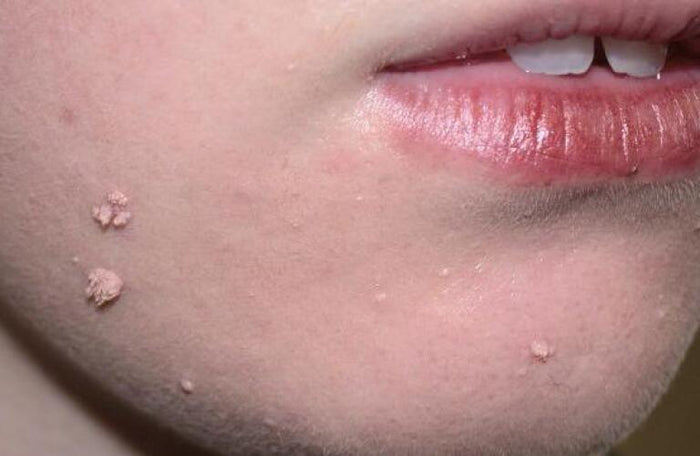
Quick Answer: Small, rough, raised growths on the finger with a cauliflower-like surface are viral warts (verruca vulgaris, or the finger-like filiform variant), caused by the Human Papilloma Virus (HPV). They arise through minor skin trauma and spread by direct contact, nail biting, shaving, scratching, and shared surfaces. Treatment options include topical salicylic acid, cryotherapy, electrocautery/radiofrequency ablation, chemical cautery, and immunotherapy for recurrent or multiple lesions. Never pick or scratch warts — it spreads them — and early treatment gives the best outcomes. Case Snapshot: A patient presented with small rough raised growths over the finger showing the characteristic cauliflower-like surface of a viral wart — a lesion they had been absent-mindedly picking at for weeks, unaware that each pick was planting the next crop. What Warts Actually Are Common warts are benign skin growths caused by the Human Papilloma Virus (HPV) infecting the outer skin layer and instructing it to overgrow into the rough, papillated, cauliflower-textured bump patients recognise instantly. The filiform variant sends up finger-like projections and favours the face and hands. Warts are not a hygiene failure and not dangerous — but they are genuinely contagious, to other people and, importantly, to the patient's own adjacent skin. How They Arrive and How They Spread HPV enters through minor skin trauma — cuts, hangnails, abrasions too small to notice. Spread then occurs through: Direct skin contact Nail biting — seeding warts around the nails and lips Shaving — dragging virus across the skin in neat lines Scratching existing warts, then touching intact skin (autoinoculation) Shared contaminated surfaces and objects Risk is higher in children and young adults, people with frequent wet work, and those with lowered immunity — softened, damp, or immune-compromised skin admits the virus more easily. The Treatment Menu No single method wins every time; choice depends on the wart's site, size, number, and the patient: Topical salicylic acid preparations — patient-applied keratolytic therapy over weeks; effective for patient and dermatologist alike when used diligently Cryotherapy (liquid nitrogen) — controlled freezing across one or several sessions; the clinic workhorse Electrocautery or radiofrequency ablation — physical destruction, often single-session for suitable lesions Chemical cautery — precise chemical destruction for selected warts Immunotherapy — recruiting the patient's own immune system; particularly valuable in recurrent or multiple lesions, where destroying warts one-by-one loses the race Whichever route, the principle from this case stands: early treatment usually gives better cosmetic and therapeutic outcomes — small, young warts clear faster and scar less than large established colonies. Explore professional wart removal at Allodermis. The One Rule Above All Do not pick or scratch. Every manipulation showers virus onto surrounding skin; the single wart that became five is almost always a picking story. Cover treated warts, wash hands after any contact, stop nail biting, and don't share towels, razors, or nail tools during treatment. Protecting the Household During Treatment Because HPV travels on objects as well as skin, a few weeks of simple discipline protects family members: separate towels and face cloths for the affected person; no shared razors, nail clippers, files, or pumice stones — these carry virus exceptionally well; cover treated warts with a plaster during the healing phase; wash hands after applying wart treatments; and for children, discourage thumb-sucking and nail biting while hand warts are active, since mouth-to-hand cycling both spreads and re-infects. None of this requires isolation or anxiety — casual household contact is low-risk — it simply removes the high-efficiency transfer routes while treatment does its work. Wart or Something Else? Corns, calluses, and a few other lesions mimic warts on hands and fingers. The wart's tells: cauliflower surface, interrupted skin lines, and tiny black dots (clotted vessels) on paring. When in doubt — especially for rapidly growing, painful, or unusual lesions — a dermatologist's examination beats a pharmacy guess. When to See a Dermatologist See a dermatologist if warts are multiplying, sitting near nails or on the face (where home acids are risky), painful, resistant to a month of over-the-counter salicylic acid, or if you are diabetic or immunosuppressed. Book a wart-removal consultation — and bring every wart you have, since clearing all lesions together prevents reseeding. FAQs Q: Will warts go away without treatment? Many eventually do as immunity catches up — over months to years — but they commonly spread first. Treatment shortens the story and limits the colony. Q: Why did my wart come back after freezing? Cryotherapy often needs multiple sessions, and virus can persist in clinically normal margins. Recurrence means continue treatment, not that treatment "failed." Q: Are finger warts the same virus as genital warts? Both are HPV, but typically different strains. Common hand warts are not classified as a sexually transmitted condition. Q: Can I use one salicylic acid product for face and hands? No — facial and periungual skin need gentler, dermatologist-directed approaches. Strong keratolytics belong on thick hand/foot skin only. 📌 Case Study Reference: Publicly shared patient image and query, Reddit dermatology communities. Educational discussion only; not a final diagnosis. Clinical commentary by the Allodermis dermatology team.
Learn more