Case Study
Case 38: Oval Scaly Patches Appearing on Both Daughters — Pityriasis Rosea, the Self-Limiting Rash That Follows a Cold
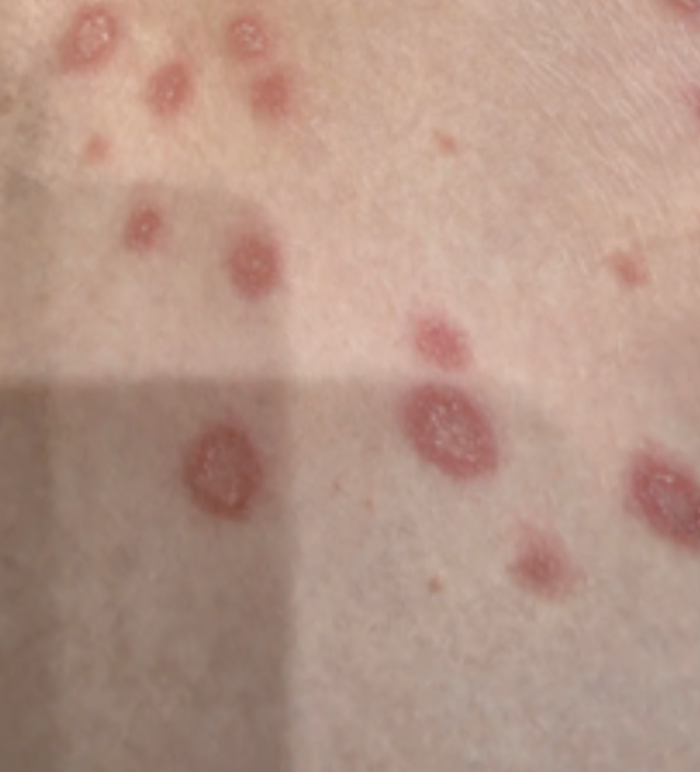
Quick Answer: Multiple oval reddish patches with fine scaling at the edges and inward peeling suggest pityriasis rosea — a common, harmless, self-limiting skin condition of children and young adults, often preceded by a recent viral illness (fever, cold, cough, or sore throat). It is thought to be linked to viral triggers, resolves on its own over several weeks, and needs only symptomatic care: moisturisers, mild topical steroids if itchy, antihistamines for itching, gentle skin care, and avoiding harsh soaps. Parents can be reassured it usually clears without scarring. Case Snapshot: A parent asked: "Any idea what this is? Both my daughters have it." Images showed multiple oval reddish patches with fine scaling at the edge, peeling inward — the distinctive "collarette" scale pattern that points to pityriasis rosea, appearing in two siblings within the same window. What Is Pityriasis Rosea? Pityriasis rosea is a common, self-limiting skin condition most often seen in children and young adults. The classic story: a few days to weeks after an ordinary upper respiratory infection — a viral fever, cold, cough, or sore throat — a rash of oval, salmon-to-reddish patches blooms across the trunk and upper limbs. Each patch carries the diagnostic signature seen in this case: a rim of fine scale at the edge that peels inward, like tissue paper attached at the border. Often (though not always) a single larger "herald patch" appears first, with the wider crop following; on the back, patches may align along skin lines in a "Christmas-tree" pattern. The Cause — Honestly Stated The exact cause is not fully established, but it is thought to be linked to viral triggers in some cases — which fits both the post-viral timing and, as here, its occasional appearance in more than one family member sharing the same seasonal infections. Importantly, the rash itself is not considered meaningfully contagious in the way infections like ringworm or scabies are — siblings developing it together reflects shared viral exposure more than rash-to-rash spread. The Course: Weeks, Then Gone This is the reassurance at the heart of the case: the condition is usually harmless and resolves on its own over several weeks — commonly 6–8, sometimes longer — and only symptomatic treatment is required. The rash may look worse before it fades; darker skin can show more prominent scaling and post-rash pigmentation that itself settles over subsequent weeks. Symptomatic Care That Helps Moisturisers — liberally, keeping patches supple and less itchy and flaky Mild topical steroids if itchy — short courses, as advised, for the more irritable patches Antihistamines for itching, especially to protect sleep Gentle skin care and avoiding harsh soaps — anything stripping worsens the scale and the itch; lukewarm baths and soap-free cleansers are the standard Loose cotton clothing; avoiding overheating and heavy sweating, which aggravate itch Parents should be reassured that this is usually not dangerous and often improves spontaneously without scarring — the sentence most families most need to hear. The Look-Alikes Worth Excluding The reason a doctor's confirmation is still worthwhile: a few conditions imitate pityriasis rosea — ringworm (usually fewer, expanding ringed patches — and antifungals treat it, unlike PR), eczema, drug-related rashes, and in sexually active age groups, secondary syphilis classically mimics PR and is checked for when the picture fits. A quick examination — occasionally with a KOH scraping to exclude fungus — settles the diagnosis and prevents weeks of wrong creams. A Simple Home Plan for the Coming Weeks For families, the practical version: moisturise the patches twice daily; give the evening antihistamine dose (as advised) on itchy nights so sleep is protected; keep baths short and lukewarm with a soap-free wash; dress the children in soft cotton; and take a weekly photo of a marked patch — watching the crop peak and then recede on camera reassures parents far better than daily close inspection, and gives the dermatologist a clean timeline if review is ever needed. When to See a Dermatologist See a dermatologist to confirm the diagnosis at the outset (especially with two children affected), if itching is severe, if the rash persists beyond about 8–10 weeks, keeps recurring, involves the face extensively, or is accompanied by feeling unwell — the cues to reconsider mimics. Book a consultation here. FAQs Q: Should my daughters stay home from school? No — pityriasis rosea is not classed as contagious, and children can attend school and play normally. Q: Will the patches leave marks? It typically clears without scarring; temporary light or dark patches in darker skin fade over weeks with moisturiser and sun sense. Q: Can they bathe and swim normally? Yes — lukewarm bathing with gentle cleansers is fine; very hot water and harsh soaps worsen itch and scaling. Q: Why did both children get it together? Shared household viral infections in the preceding weeks are the likely common trigger — a pattern occasionally seen in families. 📌 Case Study Reference: Publicly shared patient images and query, r/DermatologyQuestions, Reddit — "Any idea what this is? Both my daughters have it". Educational discussion only; not a final diagnosis. Clinical commentary by the Allodermis dermatology team.




Learn more