

























































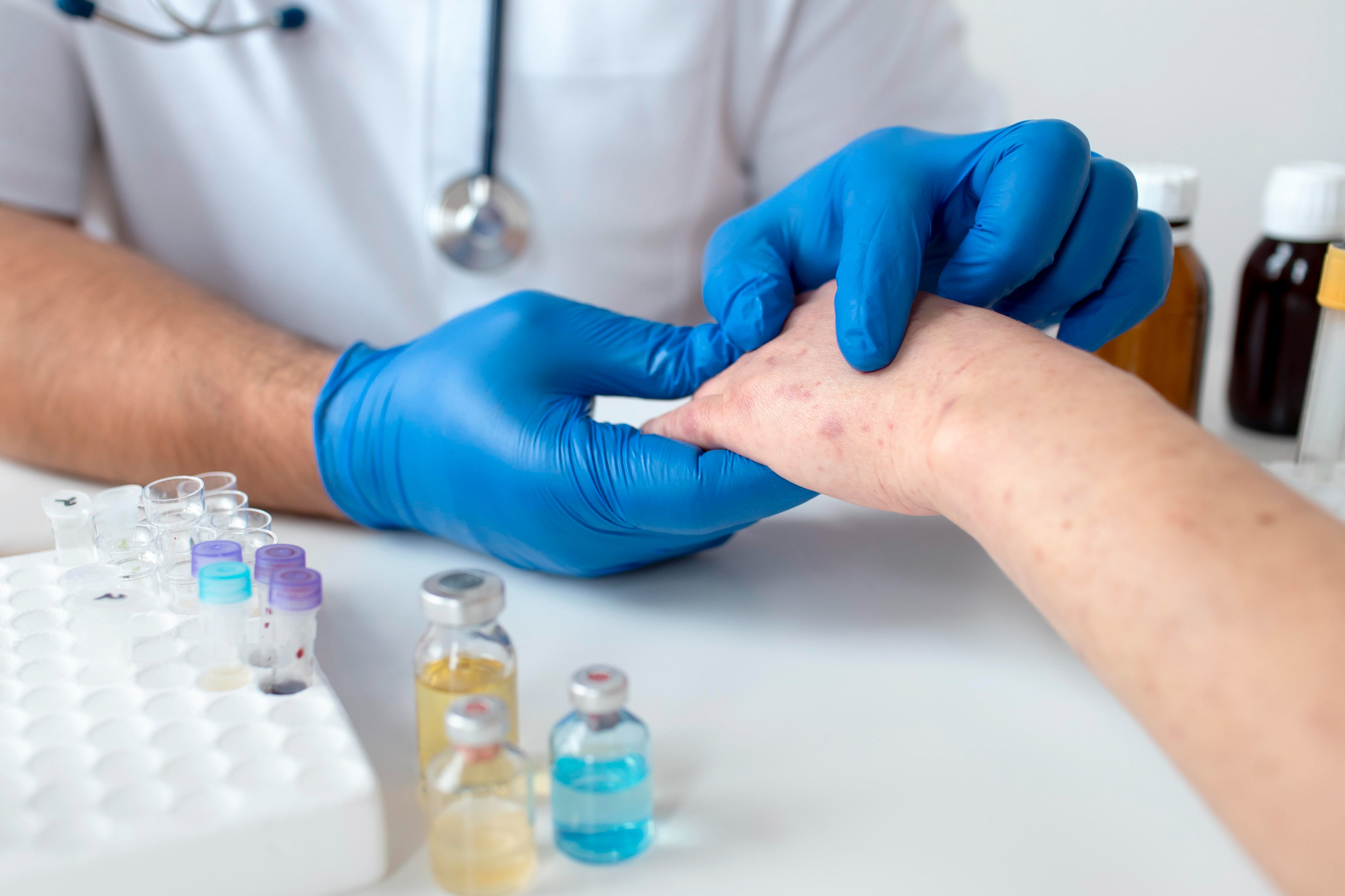




Quick Answer: A well-defined, round, dusky violet patch with surrounding redness is characteristic of a Fixed Drug Eruption (FDE) — a type of drug allergy where the lesion reappears at the exact same site every time the triggering medicine is taken. Common culprits are over-the-counter painkillers (NSAIDs like diclofenac, ibuprofen, mefenamic acid), paracetamol, and some antibiotics and antifungals. The essential step is identifying and permanently avoiding the culprit drug — re-exposure causes larger, multiple, and sometimes blistering lesions. Stop the suspected medicine, see a dermatologist, and document the drug for lifelong avoidance.
Case Snapshot: A patient asked, "Can anyone tell me what this is or could be — very…" sharing images of a well-defined round dusky violaceous patch with surrounding redness. The morphology alone is nearly diagnostic — and the key question a dermatologist would ask next is: what tablet did you take in the last day or two?
What Is a Fixed Drug Eruption?
A fixed drug eruption is a type of drug allergy where the skin lesion reappears at the exact same site whenever the triggering medicine is taken again. A population of immune cells stationed in that patch of skin has memorised the drug; each re-exposure reactivates them locally, producing the round, dusky, red-violet patch — sometimes with burning or itching — which then fades into residual dark pigmentation that marks the site between episodes. "Fixed" is the operative word: the same spot, every time, is the disease's signature and its diagnostic gift.
The Usual Suspects
FDE most commonly follows over-the-counter medications — which is exactly why patients rarely connect the dots themselves:
- Painkillers — NSAIDs such as diclofenac, ibuprofen, mefenamic acid
- Paracetamol
- Some antibiotics and antifungals, among others
The everyday scenario writes itself: a headache or period pain, a familiar tablet from the chemist, and by the next day the "burn-like" patch has returned on the lip, hand, or thigh — attributed to anything but the tablet.
The Typical Story
Patients notice:
- Sudden appearance of a dark red or purple patch, usually within hours to a day of taking the drug
- A burning or itching sensation in the patch
- Recurrence at the same location after re-exposure — the tell-tale loop
- Residual dark pigmentation after healing, deepening with each episode
Lesions can occur anywhere but commonly affect the lips, genitals, trunk, hands and feet — and genital or lip FDE is frequently misdiagnosed as infection until the drug link is found.
Why Identification Is Urgent, Not Optional
The most important step is identifying and avoiding the culprit medication, because the condition escalates: repeated exposure can cause larger and multiple new lesions, and blistering in severe cases — widespread blistering drug reactions are serious medical territory. Each casual re-exposure also darkens the permanent pigment stain. The management sequence is therefore clear: stop the offending (and suspected) drug now; see your dermatologist for treatment of the acute patch and the residual pigmentation; and — the step patients most often skip — document the culprit medicine for future avoidance: written in your records, saved in your phone, told to every doctor and pharmacist, with safe alternative painkillers explicitly agreed with your physician, since related drugs can cross-react.
How the Culprit Is Confirmed
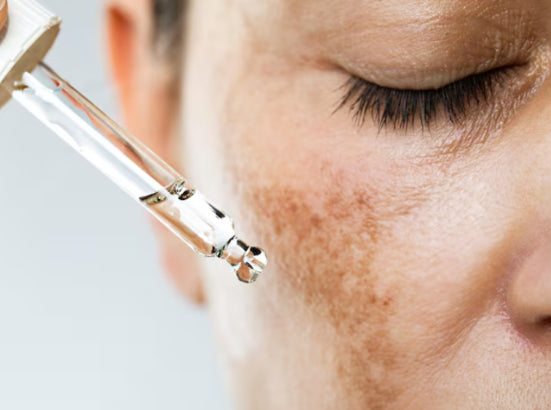
The diagnosis is usually clinical — the fixed-site story plus the morphology. Where several drugs are candidates, dermatologists work through timing charts of intake versus flares; supervised confirmation strategies exist, but unsupervised "testing yourself" by re-taking suspects is exactly the wrong move. The healed patch's stubborn pigmentation, meanwhile, can be managed alongside our pigmentation treatments once the trigger is secured.
When to See a Dermatologist
See a dermatologist promptly for any round dusky patch that appeared after medication, any rash recurring at a fixed site, and urgently for multiple patches, blistering, mouth/genital erosions, or feeling unwell with a drug rash. Bring a list — or photos — of every tablet, syrup, and supplement from the preceding week; that list usually contains the answer. Book a consultation here.
FAQs
Q: The patch faded on its own — do I still need to find the drug? Yes. FDE always fades between exposures; the next dose brings it back bigger. Finding and banning the culprit is the actual treatment.
Q: Can a medicine I've taken safely for years suddenly cause this? Yes — drug allergies can develop after years of uneventful use, which is why "but I've always taken it" doesn't exclude a drug cause.
Q: Will the dark mark go away? The pigmentation fades slowly over months once re-exposures stop, and dermatologist-guided lightening treatment can help — but every new episode re-inks it.
Q: Is FDE dangerous? A single classic patch is uncomfortable rather than dangerous; the risk lies in repeated exposure — multiplying, enlarging, blistering lesions — which strict avoidance entirely prevents.
📌 Case Study Reference: Publicly shared patient images and query, r/DermatologyQuestions, Reddit — "Can anyone tell me what this is or could be — very…". Educational discussion only; not a final diagnosis. Clinical commentary by the Allodermis dermatology team.
