

























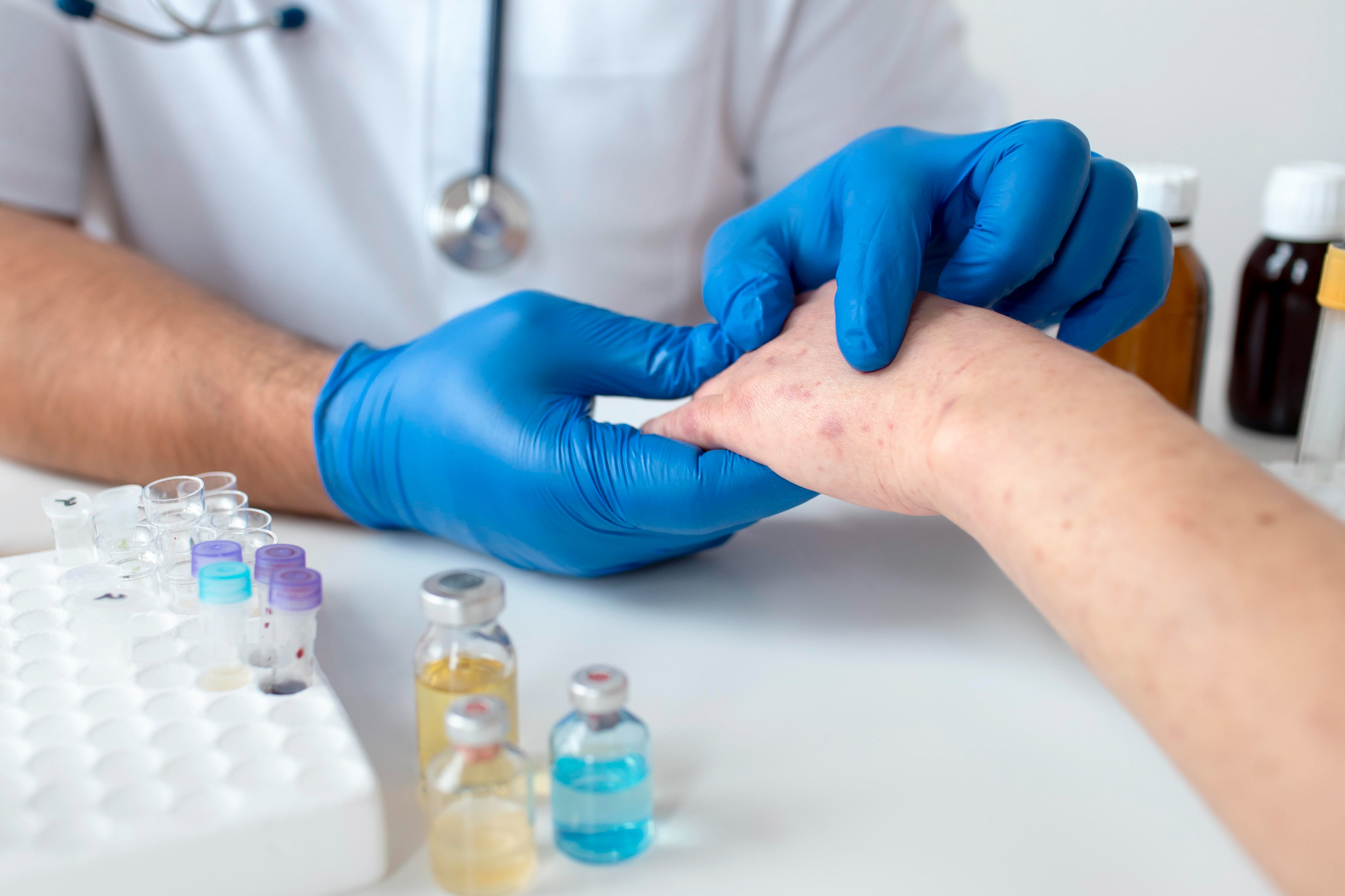



Quick Answer: Painful lumps, recurring boils with pus discharge, and scarring in the groin, armpits, buttocks, or under the breasts — persisting for years — points to Hidradenitis Suppurativa (HS), a chronic inflammatory condition of hair follicles in flexural areas. Triggers include friction, sweating, obesity, smoking, hormones, and family history. Treatment scales with severity: antibiotics and anti-inflammatory medication, biologic therapies in advanced disease, and surgery for persistent tunnels and scars. Early diagnosis matters — prompt treatment can prevent permanent scarring and dramatically improve quality of life.
Case Snapshot: A patient described "tiny bumps in my pubic area" alongside a longer story: painful lumps and scars in the groin area for the past few years — the recurring boil-heal-scar cycle that defines HS, and that patients so often endure privately for years before it is finally named.
What Is Hidradenitis Suppurativa?
HS is a chronic inflammatory condition affecting hair follicles in flexural (fold) areas — the armpits, groin, buttocks, and under the breasts. It is emphatically not an infection caught from anywhere, and not a hygiene failure: the follicles in these friction-heavy zones become blocked and inflamed, rupture deep in the skin, and set off recurring cycles of painful inflammation. Over time patients develop:
- Painful boils or nodules with recurrent pus discharge
- Sinus tracts — tunnels under the skin connecting lesions
- Scarring and thickened skin in the affected folds
The years-long course in this case is typical — and tragic, because every untreated year adds tunnels and scars that early treatment could have prevented.
The Triggers and Risk Factors
- Friction and sweating in the folds
- Obesity — deeper folds, more friction and inflammation
- Smoking — one of the strongest and most modifiable associations
- Hormonal influences — flares often track cycles; HS typically begins after puberty
- Family history — a substantial genetic component
The Helpful Measures Every Patient Can Start
- Weight management — measurably reduces flare frequency and severity
- Stopping smoking — among the most effective single interventions in HS
- Loose cotton clothing and reducing friction in affected areas — tight synthetic clothing over active sites is fuel on the fire
- Gentle antiseptic washes and avoiding squeezing lesions, which drives inflammation deeper
Treatment: Matched to Severity
Treatment depends on severity and has genuinely advanced in recent years:
- Antibiotics — used for their anti-inflammatory action in courses, not as one-off infection treatment
- Anti-inflammatory medications and hormonal approaches in suitable patients
- Biologic therapies in advanced cases — targeted injectable medicines that have transformed outcomes in moderate-to-severe HS
- Surgical procedures for persistent tunnels and scars — deroofing and excision remove disease that medicines cannot reach
The strategic message of this case: early diagnosis is important because prompt treatment can help prevent permanent scarring and improve quality of life. HS is staged — and treatment started at the "recurring boils" stage protects patients from ever reaching the "tunnels and scars" stage.
The Diagnosis Delay Problem
HS patients average years of misdiagnosis — treated repeatedly as simple boils, "infections," or ingrown hairs — while the disease quietly stages upward. The pattern that should trigger the HS question: recurrent painful lesions, in flexural sites, on both sides, scarring over time, for months to years. If that describes you, ask the question directly at your consultation; naming the disease is the turning point.
Living Between Flares
Day-to-day management shrinks the disease's footprint: warm compresses ease early painful nodules; a gentle antiseptic wash in affected folds a few times weekly reduces flare frequency; loose, breathable clothing and moisture-wicking fabrics cut the friction-sweat combination; and a flare diary (dates, sites, cycle timing, stress) turns the pattern into data your dermatologist can act on — hormonal clustering, for instance, opens specific treatment doors. Keep a named clinician: HS managed by one consistent dermatologist across years outperforms scattered emergency visits for each boil.
When to See a Dermatologist
See a dermatologist for any recurring painful boils in the armpits, groin, buttocks, or breast folds — especially with scarring, tunnels, discharge, or a family history. HS also carries emotional weight — pain, odour anxiety, intimacy avoidance — that deserves acknowledgment and support as part of care. Book a confidential consultation here.
FAQs
Q: Is HS contagious or caused by poor hygiene? Neither — it is an inflammatory follicular disease with genetic and lifestyle drivers. Scrubbing harder worsens it.
Q: Why do antibiotics help if it's not an infection? Certain antibiotics are used in HS primarily for their anti-inflammatory effects on the follicle, which is why they're given in structured courses.
Q: Will weight loss and quitting smoking really change my HS? They are two of the highest-impact interventions available — many patients see flares shrink markedly with both.
Q: Can HS be cured? There is no absolute cure yet, but modern staged treatment — lifestyle, medical, biologic, surgical — controls most cases well, and early treatment prevents the irreversible scarring stage.
📌 Case Study Reference: Publicly shared patient images and query, r/DermatologyQuestions, Reddit — "Tiny bumps appeared on my pubic area — they're…". Educational discussion only; not a final diagnosis. Clinical commentary by the Allodermis dermatology team.
