




















Quick Answer: Soft, yellowish, flat or slightly raised plaques around the eyelids — typically near the inner corners — are xanthelasma palpebrarum: deposits of cholesterol and fats within the skin. Xanthelasma is harmless and painless, but can be associated with high cholesterol or triglycerides, diabetes, obesity, thyroid disorders, and familial lipid abnormalities — so dermatologists advise lipid profile and blood sugar testing. Treatment is cosmetic — chemical cautery, radiofrequency/electrocautery, laser, or surgical removal — and recurrence can occur if underlying lipid abnormalities aren't controlled.
Case Snapshot: A patient presented with soft yellowish plaques around the eyelids — painless, slowly enlarging over time, and purely a cosmetic complaint from the patient's perspective. From the dermatologist's perspective, however, the plaques doubled as a prompt for a metabolic check-up.
What Is Xanthelasma?
Xanthelasma palpebrarum consists of deposits of cholesterol and fats within the skin around the eyes — lipid-laden cells accumulating in the thin eyelid skin, visible as yellowish, velvety, flat-to-slightly-raised patches, classically over the inner eyelids near the nose, often symmetric, and slowly increasing in size over time. It causes no pain, no itch, no danger to the eye — cosmetic concern rather than symptoms is the standard presentation.
The Associations That Make It Interesting
Xanthelasma is usually harmless in itself, but it can sometimes be associated with:
- High cholesterol or triglyceride levels
- Diabetes
- Obesity
- Thyroid disorders
- A family history of lipid abnormalities
Two honest caveats frame the work-up: a meaningful share of patients — some people develop xanthelasma even with normal cholesterol levels — and conversely, the plaques can be the first visible clue to a silent lipid problem. That uncertainty is exactly why testing, rather than assumption in either direction, is the standard: since xanthelasma can occasionally signal underlying lipid abnormalities, dermatologists often advise a lipid profile, blood sugar evaluation, and lifestyle assessment. Ten minutes of blood work converts a cosmetic bump into either reassurance or an early, actionable warning.
The Prevention Side
Whether or not tests come back abnormal, the associated risk factors respond to the same measures:
- Maintaining a healthy weight
- Regular exercise
- Reducing saturated fats and processed foods
- Managing diabetes and cholesterol properly where present
For patients with confirmed lipid or metabolic findings, structured support — including our weight management program — addresses the cause the plaques were signalling.
Treatment: Cosmetic, Effective, and Honest About Recurrence
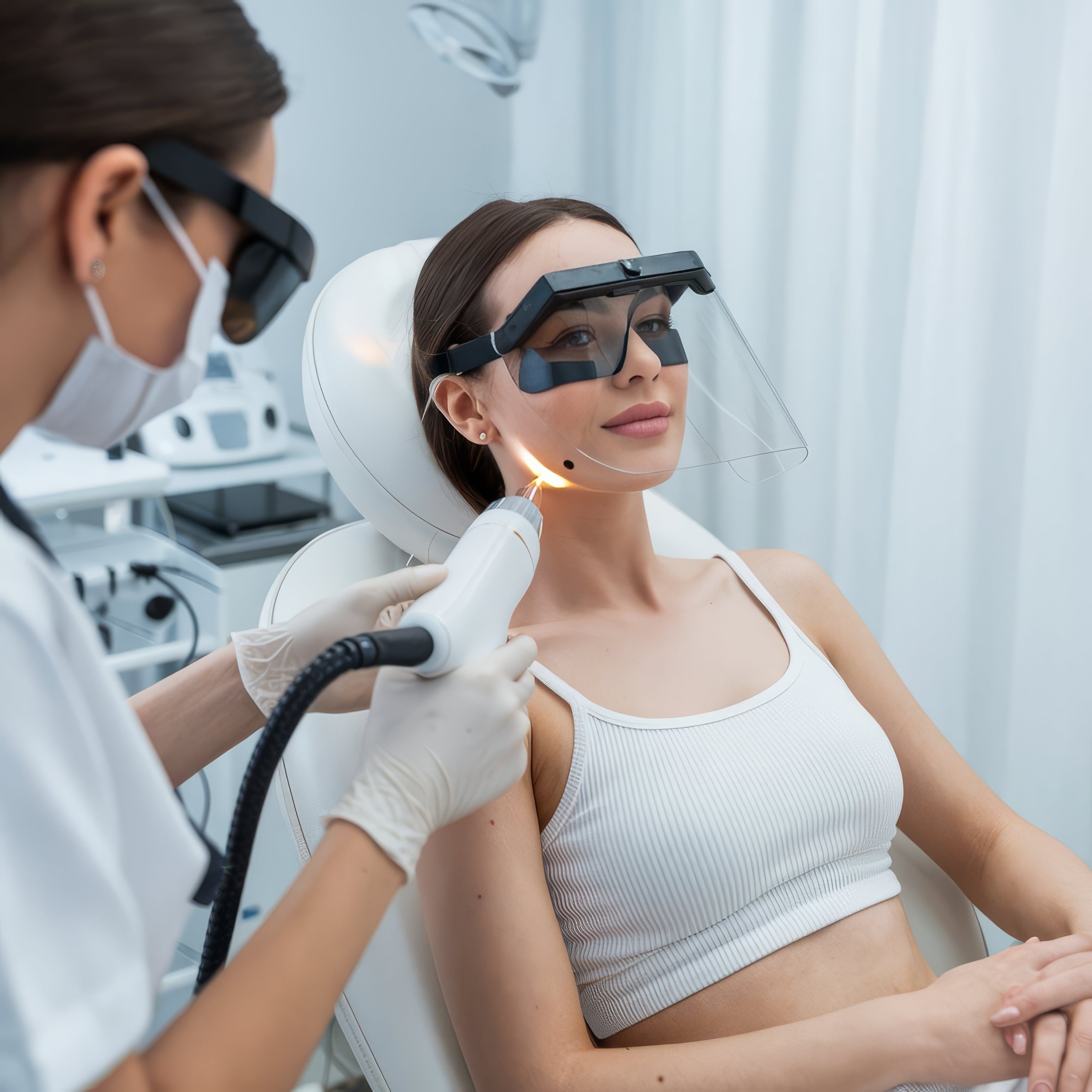
Removal is elective and cosmetic, with several in-clinic options:
- Chemical cautery — precise chemical application dissolving the plaque
- Radiofrequency or electrocautery — controlled physical removal
- Laser treatment
- Surgical removal in selected cases — typically larger plaques
Eyelid skin is thin and unforgiving, so operator skill and conservative technique matter — this is not territory for salon procedures or home remedies. And the expectation-setting sentence every patient should hear before treatment: even after removal, recurrence can occur if underlying lipid abnormalities are not controlled. Removing the deposit without addressing the lipid environment invites the deposit back; pairing removal with metabolic management gives the durable result.
The Typical Patient Journey
The pattern repeats in clinic: yellowish flat or slightly raised patches, commonly over the inner eyelids, slowly increasing in size over time — first noticed in photographs or pointed out by family, then watched anxiously for months, then presented with the question "is this dangerous?" The answers, in order: no, the plaque itself is benign; yes, it deserves a lipid and sugar check; and yes, it can be removed well if it bothers you. Framing the visit around all three — reassurance, screening, and options — is what turns a cosmetic complaint into complete care. Patients also ask whether rubbing, massage, or home remedies shrink the plaques: they don't, and caustic home applications on eyelid skin cause burns and scarring far worse than the xanthelasma.
When to See a Dermatologist
See a dermatologist for any yellowish eyelid patch — first for confirmation (a few other eyelid lesions can mimic xanthelasma), then for the metabolic screen, and for removal planning if the appearance bothers you. New xanthelasma in a younger patient particularly strengthens the case for a full lipid work-up, sometimes extending to family screening. Book a consultation here.
FAQs
Q: Will xanthelasma go away if my cholesterol improves? Established plaques rarely disappear on their own even with excellent lipid control — control prevents growth and recurrence; removal is what clears the existing patch.
Q: Is removal painful, and will it scar? Procedures are done under local anaesthesia with short downtime; in experienced hands on suitable plaques, cosmetic results are good, though temporary redness or light/dark marks can occur on healing eyelid skin.
Q: My cholesterol is normal — why do I have these? A recognised subset of patients develops xanthelasma with normal lipids; local factors in eyelid skin play a role. The test was still worth doing — that's how you know.
Q: Can xanthelasma turn dangerous or cancerous? No — it is a benign lipid deposit. Its only "danger" is as a possible messenger about cholesterol and metabolic health.
📌 Case Study Reference: Clinical case presentation with publicly shared patient imagery, dermatology community discussion. Educational discussion only; not a final diagnosis. Clinical commentary by the Allodermis dermatology team.
