





































Quick Answer: Small red bumps that quickly develop into fragile blisters, rupturing to leave raw pink areas rimmed by peeling skin, suggest bullous impetigo — a superficial bacterial skin infection usually caused by Staphylococcus aureus. More common in children but seen in adults after minor skin injury, sweating, eczema, shaving, or close contact, it is contagious via scratching, shared towels, and direct contact. Treatment is topical or oral antibiotics depending on extent, plus keeping the area clean, not scratching, and not sharing personal items — with early treatment preventing spread to other body sites and close contacts.
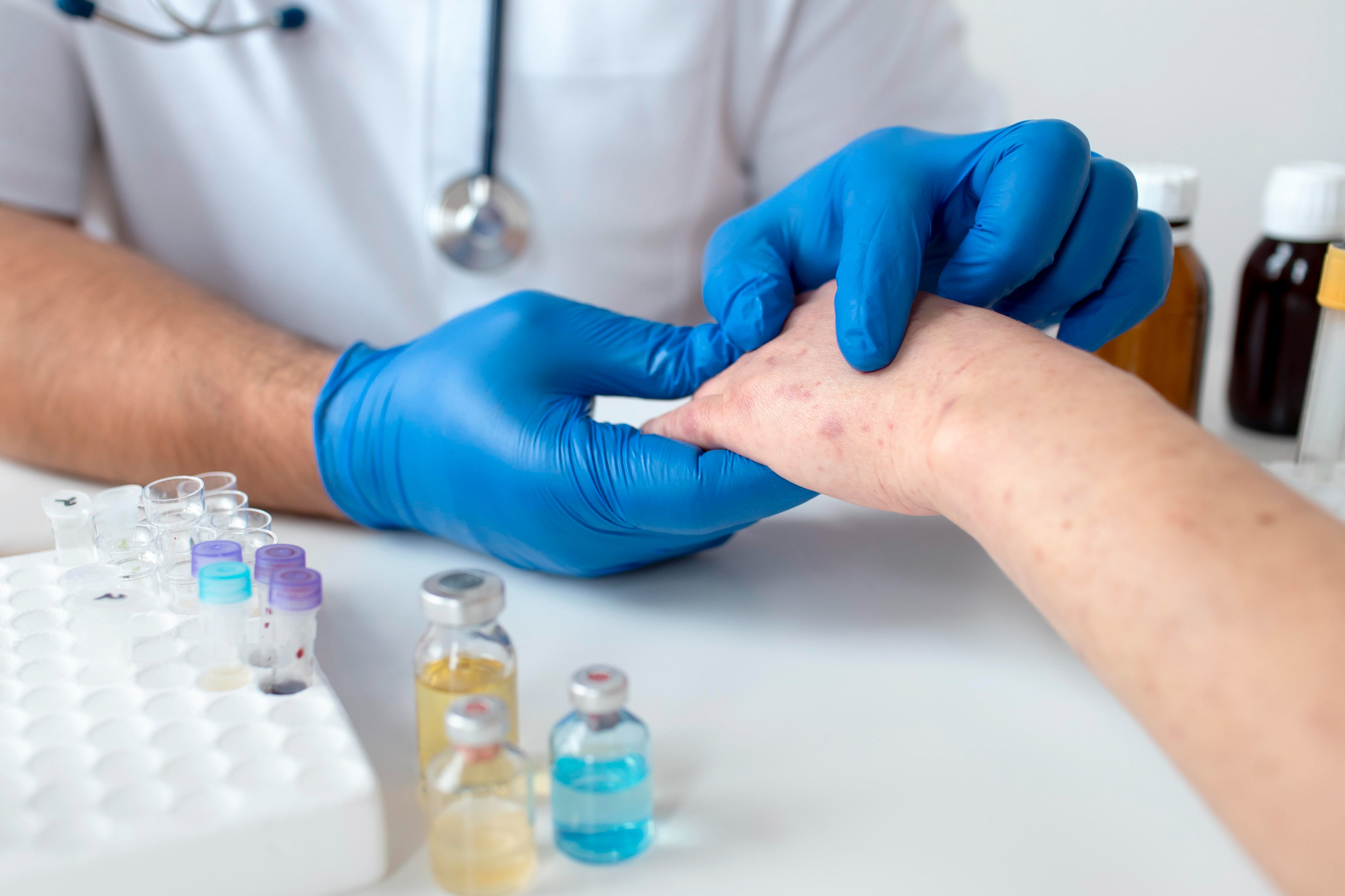
Case Snapshot: A patient pleaded: "Someone help me with knowing what this is — I have…" — images showed the tell-tale sequence of bullous impetigo: small red bumps that had become fragile blisters, most already ruptured into raw pink patches with a rim of peeling skin, the collapsed blister roofs at their edges.
What Is Bullous Impetigo?
Bullous impetigo is a superficial bacterial skin infection usually caused by Staphylococcus aureus. The bacteria produce toxins that cleave the very top layer of the skin, so small red bumps quickly develop into fragile blisters — and because that blister roof is paper-thin, it ruptures easily, leaving behind raw pink areas with a rim of peeling skin. The infection stays superficial (hence generally excellent healing without scarring when treated), but its superficiality is also what makes it so transmissible — the raw surfaces and blister fluid are rich in bacteria.
Who Gets It and Why
Although more common in children, bullous impetigo can also occur in adults, particularly after:
- Minor skin injury — cuts, grazes, insect bites, scratched itches
- Excessive sweating and humid weather softening the skin
- Eczema — the impaired barrier is an open door, and impetigo commonly complicates scratched eczema
- Shaving — micro-nicks inoculating bacteria
- Close skin contact — households, sports, daycare
The Contagion Rules
The infection is contagious and may spread through scratching, shared towels, or direct skin contact — including to new sites on the patient's own body via fingernails (the classic "why do new spots keep appearing" mechanism). While lesions are active:
- Keep the area clean and gently covered where practical
- Avoid scratching — trim nails; treat itch rather than enduring it
- Avoid sharing towels, clothing, razors, and bedding until the infection has cleared
- Wash hands frequently, especially after any contact with lesions
- Children typically stay home from school/daycare briefly until treatment has taken hold, per local guidance
Treatment — Simple, Effective, Best Started Early
Treatment typically involves topical or oral antibiotics depending on the extent of involvement — a small localized patch may need only prescription antibiotic cream; multiple sites, spreading lesions, or constitutional symptoms tip toward oral therapy. The strategic sentence of this case: early treatment helps prevent spread to other areas of the body and to close contacts — impetigo caught at three lesions is a week's cream; impetigo ignored for three weeks is a family project. What not to do: home antiseptics as sole treatment for spreading lesions, popping blisters, or steroid creams (which feed bacterial spread).
The Household Checklist During Treatment
For the treatment week, a simple regime protects the family: hot-wash the patient's towels, pillowcases, and recently worn clothing; assign personal towels and don't rotate them through shared racks; disinfect commonly touched surfaces the lesions may have met; apply prescribed creams with a clean cotton bud or gloved finger rather than bare fingertips; and check other family members' skin daily for new red bumps so any secondary case starts treatment on day one. These unglamorous steps are why some households clear impetigo in a week while others pass it around for a month.
The Recurrence Question
Impetigo that keeps returning prompts a look at the underlying terrain: untreated eczema being scratched open (managing the eczema prevents the impetigo), bacterial carriage in the household, and shared-item habits. A dermatologist addresses these alongside the acute treatment so the cycle actually ends.
When to See a Dermatologist
See a dermatologist promptly for suspected impetigo — for confirmation (a few blistering conditions mimic it, and correct identification matters), for the right antibiotic route, and urgently if lesions are rapidly spreading, accompanied by fever or feeling unwell, on an infant, or arising atop widespread eczema. Recurrent episodes deserve the terrain review above. Book a consultation here.
FAQs
Q: Will impetigo scar? Usually not — it is superficial and heals cleanly with treatment; temporary pink or dark marks fade over weeks. Deep scratching and delay are what risk marks.
Q: How quickly does it stop being contagious? Typically within 24–48 hours of effective antibiotic treatment, once lesions begin drying — the practical benchmark for school return, per your doctor's advice.
Q: Can adults really catch this from their kids? Yes — shared towels, close contact, and caring for lesions barehanded are the usual routes. Household hygiene during treatment protects everyone.
Q: My "impetigo" keeps coming back in the same spot — why? Persistent scratching (often eczema-driven), incomplete treatment, or re-exposure from shared items are the usual suspects — and each has a fix once identified.
📌 Case Study Reference: Publicly shared patient images and query, r/DermatologyQuestions, Reddit — "Someone help me with knowing what this is — I have…". Educational discussion only; not a final diagnosis. Clinical commentary by the Allodermis dermatology team.
