

























Tyrodin Cream: Uses, Benefits, Side Effects & How to Use

Quick answer: Tyrodin Cream is a dermatologist-formulated pigmentation-correction cream with tranexamic acid, kojic acid dipalmitate, arbutin and vitamin E. It is used to fade melasma, dark spots, post-acne marks and uneven tone by reducing excess melanin. Apply a thin layer once daily at night, always pair it with a daytime sunscreen, and give it 6–8 weeks of consistent use.
If dark patches, melasma or post-acne marks are your main concern, a targeted pigmentation cream can do what an ordinary "fairness" cream never will — because it works on the cause of the pigment, not just the surface. Tyrodin Cream is one of the most-searched pigmentation creams in India, and below our team at Allodermis breaks down exactly what it does, how to use it safely, and how to build a routine that actually clears dark spots.
What is Tyrodin Cream?
Tyrodin Cream is a dermatologist-formulated depigmentation cream designed for melasma, hyperpigmentation, dark spots and post-inflammatory marks (the brown marks left after acne). It uses a multi-active approach rather than a single ingredient, which is why it targets pigmentation from several angles at once. It has a non-greasy texture and suits most skin types for daily use.
Key ingredients and what they do
- Tranexamic acid — calms the overactive pigment pathway that drives melasma and stubborn patches; one of the most evidence-backed actives for melasma.
- Kojic acid dipalmitate — a stable form of kojic acid that inhibits tyrosinase, the enzyme that makes melanin.
- Arbutin (alpha-arbutin) — a gentle, naturally-derived brightener that fades dark spots without harshness.
- Magnesium ascorbyl phosphate (vitamin C) — an antioxidant that brightens and protects against further pigment damage.
- Vitamin E — conditions and supports the skin barrier.
What is Tyrodin Cream used for?
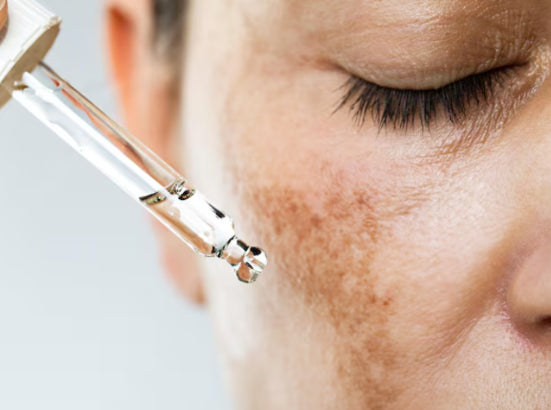
- Melasma — the hormonal, symmetrical brown patches common on the cheeks and forehead.
- Dark spots and uneven tone — from sun exposure and ageing.
- Post-acne marks (PIH) — the brown marks left behind after pimples heal.
- General skin brightening — a more even, luminous complexion over time.
Because it tackles melanin at the source, Tyrodin is a "treat the cause" product. For deeper or long-standing melasma, it works best as part of a plan — see our pigmentation treatment and melasma care pages. If sun tan is your trigger, pair it with tan removal.
How to use Tyrodin Cream (the right way)
- Cleanse with a gentle face wash such as Cetaphil Gentle Skin Cleanser and pat dry.
- Apply at night — a thin layer, only on the pigmented areas, once daily to start.
- Avoid the eyes, lips and broken skin.
- Moisturise on top if your skin feels dry.
- Every morning, apply sunscreen — this is non-negotiable with any pigmentation cream (more below).
How often: Start once daily at night. If skin tolerates it well after 1–2 weeks, you can continue nightly. If you feel irritation, drop to alternate nights.
How long until results: Pigmentation is slow to shift — expect 6–8 weeks for a visible change and up to 12 weeks for deeper patches. Consistency matters far more than quantity.
Why sunscreen decides your result
Here's the single most important point about any pigmentation cream: without daily sunscreen, it will not work. UV exposure re-triggers the exact melanin pathway Tyrodin is trying to switch off, so skipping SPF undoes your progress every day. Pair Tyrodin with a broad-spectrum SPF 50 every morning — a matte option like UrbanShade Silicone Sunscreen Gel SPF 50 for oily skin, or Bio UV SPF 50 Spray for easy reapplication. Think of sunscreen as the other half of the treatment, not an optional add-on.
Build the complete pigmentation routine
- Treat (PM): Tyrodin Cream on the dark areas.
- Protect (AM): Broad-spectrum SPF 50, reapplied through the day.
- Boost (optional, AM): A vitamin C serum such as Sesderma C-VIT Liposomal Serum adds antioxidant brightening.
- Alternatives / step-ups: If you want to compare, Melaglow Rich Cream, Melano-TX Ultra Cream and Demelan LSA Cream for Melasma are strong dermatologist-stocked options.
You can see all pigmentation products together in the full Allodermis range, or get a quick read of your skin first with the free AI Skin Analysis.
Side effects and precautions
Tyrodin is generally well tolerated, but a few things to know:
- Mild irritation, redness or dryness can occur initially — reduce frequency if it does.
- Do a patch test before first full use if your skin is sensitive.
- Introduce slowly if you're already using actives like retinoids or acids, to avoid over-irritation.
- Pregnant or breastfeeding? Check with a doctor before using any depigmenting cream.
- Not a substitute for diagnosis — stubborn melasma often needs a combined plan (creams + in-clinic chemical peels or laser toning).
Who should use Tyrodin Cream — and who should be cautious
Tyrodin is a strong fit if your main concern is melasma, sun-induced dark spots, uneven tone or post-acne marks and you're ready to commit to nightly use plus daily sunscreen. It suits most skin types, including oily and combination skin, because the texture is non-greasy.
Be more cautious — and ideally get a quick dermatologist opinion first — if your skin is very sensitive or reactive, if you're pregnant or breastfeeding, or if you're already using multiple actives (retinoids, strong acids). In those cases, slower introduction or a tailored plan prevents irritation and gets better results.
Tyrodin vs other pigmentation creams
Different pigmentation creams lead with different hero ingredients, so the "best" one depends on your skin and history:
| If you want… | Consider | Lead actives |
|---|---|---|
| Tranexamic-acid-led melasma care | Tyrodin Cream | Tranexamic acid, kojic acid dipalmitate, arbutin |
| Multi-active brightening + renewal | Melaglow Rich Cream | Niacinamide, arbutin, kojic acid, glycolic acid |
| A classic depigmenting combination | Melano-TX Ultra Cream | Depigmenting complex |
| Targeted melasma support | Demelan LSA Cream | Melasma-focused actives |
There's no need to use several at once — pick one, stay consistent, and let a dermatologist adjust if progress stalls.
Frequently asked questions
What is Tyrodin Cream used for? It is used to treat melasma, dark spots, post-acne marks and uneven skin tone by reducing excess melanin, thanks to tranexamic acid, kojic acid dipalmitate and arbutin.
How do I use Tyrodin Cream? Apply a thin layer at night on the pigmented areas after cleansing, once daily. Always use a broad-spectrum sunscreen the next morning.
How many days does Tyrodin Cream take to work? Most people see a visible change in 6–8 weeks, with deeper pigmentation taking up to 12 weeks. Daily sunscreen is essential for results.
Does Tyrodin Cream have side effects? It is generally well tolerated. Mild redness, dryness or irritation can occur early on — reduce frequency and patch-test if your skin is sensitive.
Can Tyrodin Cream be used for dark spots and post-acne marks? Yes. It is effective for dark spots and post-inflammatory hyperpigmentation (brown marks after acne), used consistently with sun protection.
Where can I buy genuine Tyrodin Cream in India? From Allodermis, a dermatologist-led skin and hair clinic and store. Check the product page for the current price and pack size.
Fade pigmentation the dermatologist way
A cream alone can help — a cream plus daily sunscreen and a proper plan is what actually clears dark spots. Order Tyrodin Cream, add a sunscreen to protect your progress, and if your pigmentation is deep or stubborn, book a consultation or message us on WhatsApp.
Reviewed by the clinical team at Allodermis Skin & Hair Clinic, Patia, Bhubaneswar.
Authors & medical review
Swaraj Dhar is a sociopreneur, technologist, and the co-founder of Allodermis.
Every article is fact-checked against current peer-reviewed dermatology literature and Allodermis clinical protocols.
This article was last reviewed and updated on . Published .
Have a skin or hair concern?
Book a free consultation with our AIIMS MD dermatologists. Clinics in Bhubaneswar, Gurgaon, and Delhi NCR.