Skin Acacdemy
Birthmarks and Moles (Nevi): Causes, Types, Diagnosis; Safe Treatment Options
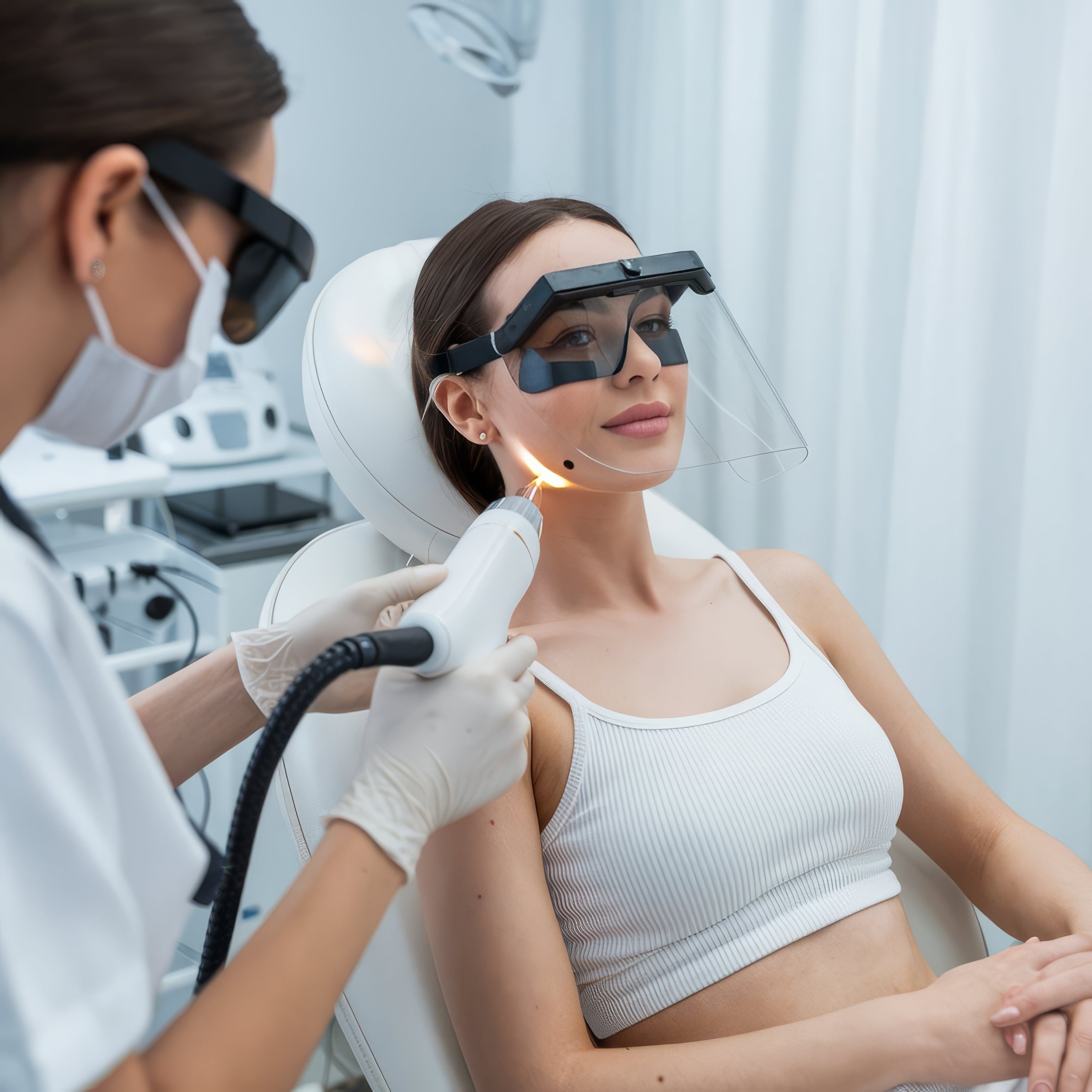
Where skin is examined, explained, and treated from the biology up. 📞 9717503031 | 🌐 www.allodermis.comAIIMS MD Dermatologists • Evidence-based care • Skintype safe protocols Introduction Birthmarks and moles are extremely common skin findings. While most are harmless, some require medical evaluation, monitoring, or treatment based on their type, location, behaviour, and long-term risk. At Allodermis, birthmarks and moles are never treated cosmetically first. Every lesion is medically evaluated, dermoscopy-guided, and risk-stratified before deciding whether observation, laser, medical therapy, or surgical removal is appropriate. Quick Answers Are birthmarks dangerous?Most birthmarks are harmless. Some require monitoring if they are large, rapidly changing, ulcerating, or associated with deeper vascular or pigment abnormalities. When should a mole be checked urgently?If it shows ABCDE changes:Asymmetry • Border irregularity • Color variation • Diameter increase • Evolving (any change) Can birthmarks or moles be removed safely?Yes—but only after correct diagnosis. Certain lesions require biopsy and histopathology rather than laser treatment. Is laser safe for Indian skin tones?Yes, when skin-type appropriate devices, conservative settings, and strict aftercare are followed. Risk control matters more than aggressive treatment. Do port wine stains return after laser?They often lighten significantly, but gradual redarkening may occur over years, making long-term follow-up important. How early should infantile hemangiomas be treated?High-risk hemangiomas should be evaluated early. Oral propranolol is commonly the first-line treatment when systemic therapy is indicated. What Are Birthmarks and Moles? Birthmarks Birthmarks are developmental skin differences involving blood vessels or pigment cells. They are usually present at birth or appear within early childhood. Moles (Nevi) Moles are localised clusters of melanocytes (pigment-producing cells). Most are benign, but certain changes can signal skin cancer risk and require urgent evaluation. Types of Birthmarks and Moles We Evaluate 1. Vascular Birthmarks Nevus simplex (angel kiss/stork bite): Often fades naturally over time Portwine stain: Flat pink to purple patches that persist and may thicken with age Infantile hemangioma: Grows after birth, then involutes; some require treatment 2. Pigmented Birthmarks and Moles Congenital melanocytic nevus (CMN): Present at birth; melanoma risk depends on size and features Caféaulait macules: Usually benign; multiple lesions may need evaluation Dermal melanocytosis (Mongolian spot): Bluish-grey patches that often fade with age Why Do Birthmarks and Moles Form? Vascular birthmarks develop due tolocalisedd variations in capillary formation during fetal growth. Pigmented birthmarks and moles occur when melanocytes cluster or persist in specific skin layers.Most cases are sporadic and not inherited. The Allodermis Diagnostic Pathway Every patient undergoes a structured medical assessment: History & photo timeline – onset, growth pattern, symptoms, family history Clinical exam with dermoscopy – improves accuracy in pigment and vascular assessment Imaging (when required) – ultrasound or Doppler for deeper vascular lesions Biopsy & histopathology – for suspicious, symptomatic, or changing lesions Risk stratification & plan – observe, treat, or refer based on medical indication Red Flags That Need Urgent Review Seek prompt dermatology evaluation if a lesion: Changes in size, shape, colour, surface, or begins bleeding Develops pain, ulceration, or rapid growth Is a medium, large, or giant congenital melanocytic nevus Appears alongside multiple caféaulait macules or systemic signs in a child Treatment Principles at Allodermis We treat only when appropriate, based on: Medical risk (bleeding, ulceration, functional impairment) Symptoms (itching, irritation, repeated trauma) Cosmetic distress (after informed, shared decision-making) Vascular Lesion Treatments Pulsed Dye Laser (PDL): First-line for portwine stains; multiple sessions required Infantile hemangioma therapy: Oral propranolol when systemic treatment is indicated Targeted procedures: For residual nodules or specific cases Pigmented Birthmarks & Mole Management Pigment lasers: Used selectively with strict criteria Mole removal: Preferred when lesions are suspicious or symptomatic, allowing histopathology ⚠️ We avoid blanket “laser removal for all moles” due to cancer risk considerations. What to Expect From Treatment Multiple sessions may be required, depending on lesion type Strict sun protection is essential Portwine stains may redarken over time Infantile hemangioma treatment requires careful monitoring Frequently Asked Questions Can birthmarks be permanently removed?Some can be significantly reduced. Results depend on depth, type, and biology. When should a mole be removed?If it shows ABCDE changes, symptoms, or clinical atypia, evaluation and biopsy are recommended. Are lasers safe for darker skin tones?Yes, when the correct devices, settings, and intervals are used. Do all childhood birthmarks need treatment?No. Many are simply monitored unless they affect function or carry a medical risk. Why Choose Allodermis? AIIMS MD Dermatologists with diagnosisfirst philosophy Dermoscopy-guided assessment for higher accuracy Indian skin-safe protocols Evidence-led technology and medication use ✍ Written by: Swaraj Dhar Co Founder Allodermis || Sociopreneur || Technologist LinkedIn ID: https://www.linkedin.com/in/swarajdhar/ Reviewed by: Dr Alok Sahoo MBBS, MD Dermatology and Venereology, AIIMS Delhi LinkedIn ID: https://www.linkedin.com/in/dralokderma/
Learn more