











Case Study
Case 23: A Pimple That's Not Painful but Won't Go Away — The Inflamed Nodule That Overstays
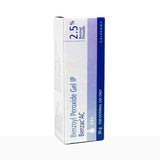
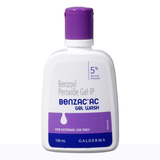
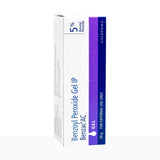
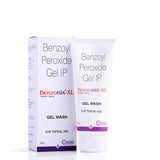
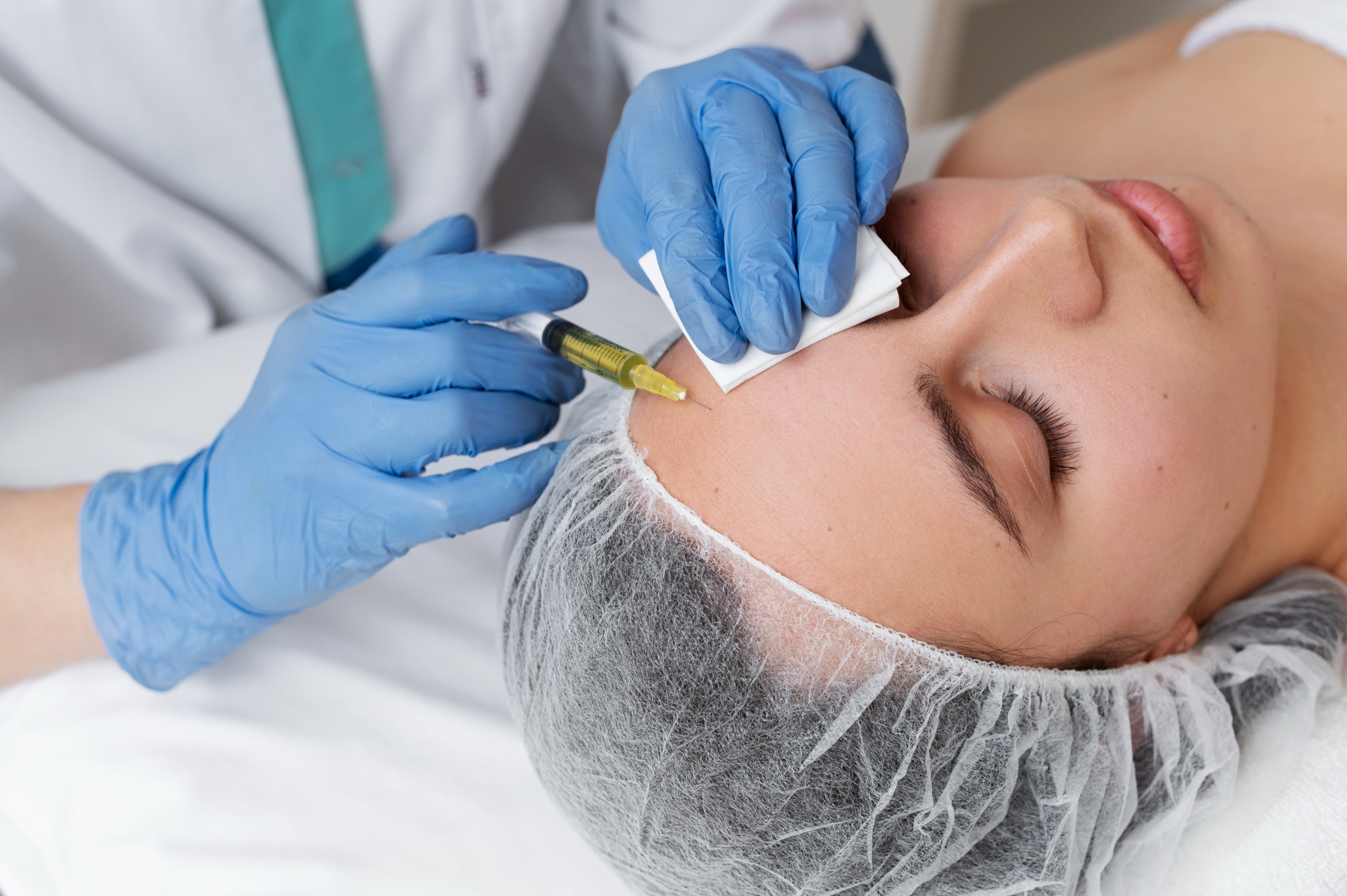
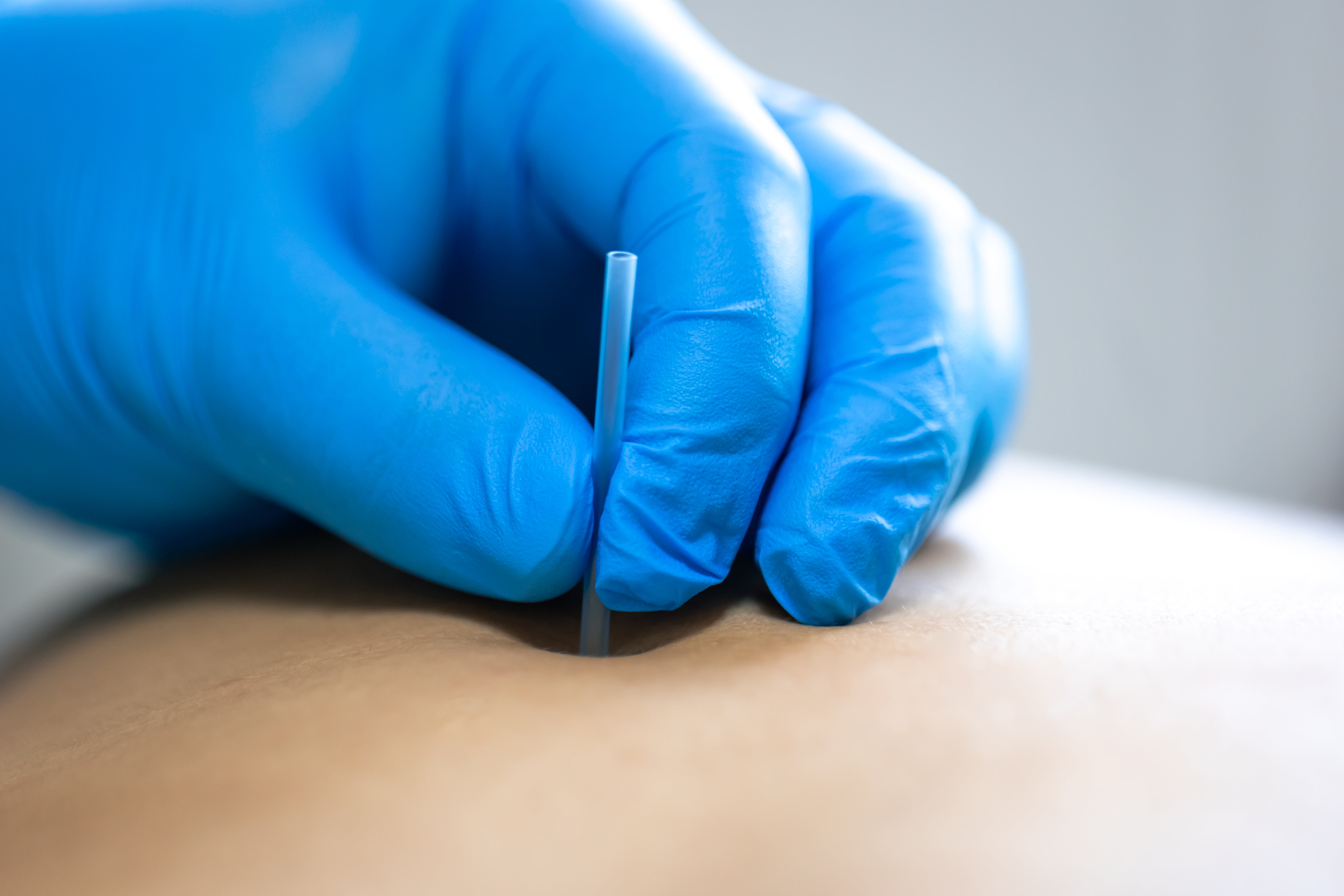
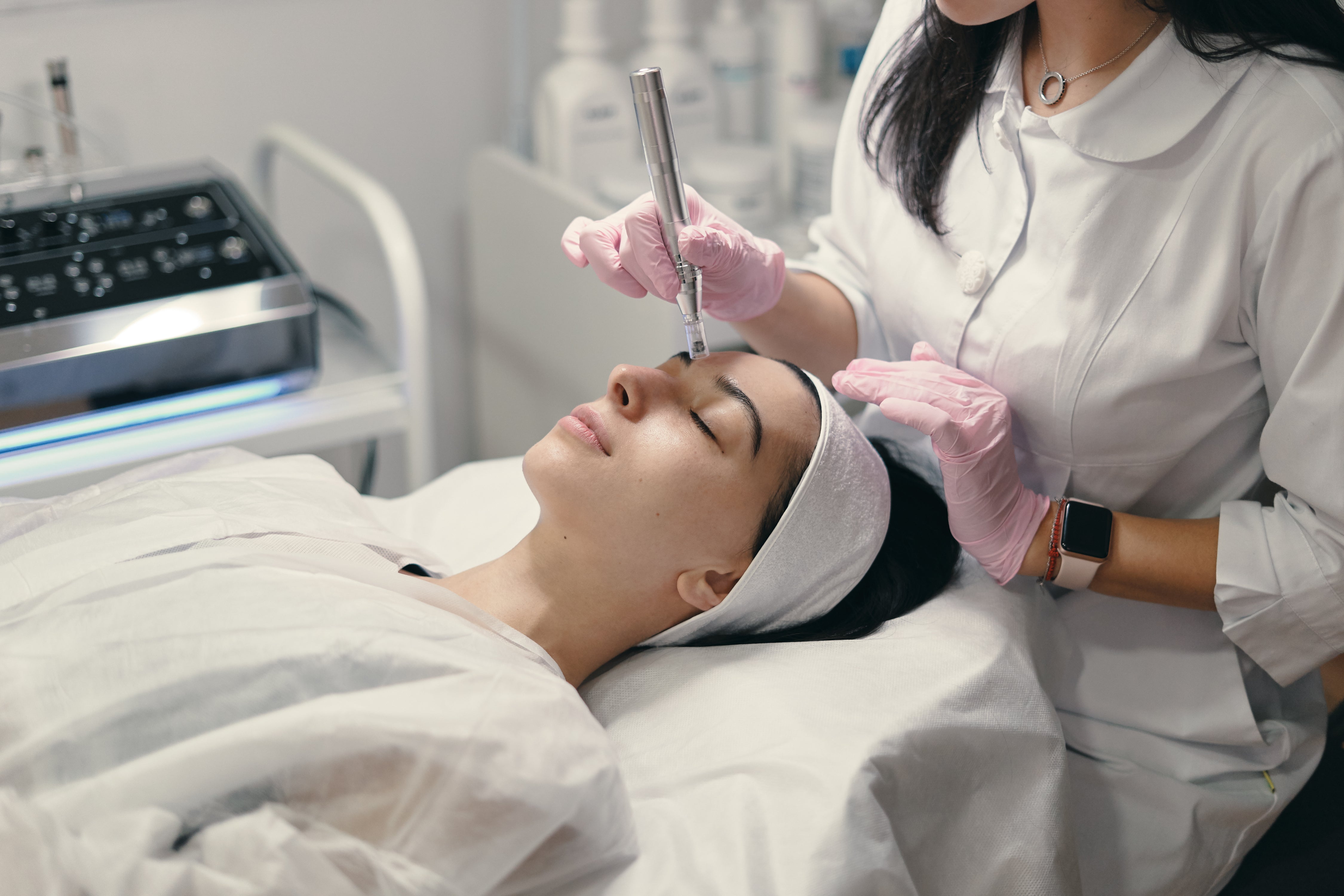
Quick Answer: A red, raised acne lesion with a pus point that lingers for weeks — even without much pain — suggests an inflamed nodular acne lesion. These persist because of ongoing inflammation and bacterial activity under the skin, and they carry a higher risk of marks and scarring. Daily care: a benzoyl peroxide cleanser or gel plus a topical retinoid (adapalene), and strictly no squeezing. Such lesions are best seen by a dermatologist, as pus-filled nodules may need aspiration and sometimes antibiotics. Case Snapshot: A user asked about a "pimple not painful but not going" — a single red, raised lesion with a visible pus point that had stubbornly persisted for weeks while ordinary pimples around it came and went. Why This Pimple Behaves Differently Ordinary superficial pimples run their course in days. A lesion that stays red and raised for weeks is telling you the process sits deeper: an inflamed nodule where ongoing inflammation and bacterial activity continue under the skin, quietly smouldering even when pain is minimal. The absence of pain is falsely reassuring — pain reflects pressure and nerve involvement, not danger. What matters is depth and duration, and on both counts, a weeks-long nodule is the lesion type that runs a higher risk of marks and scarring than any quick pustule. The Daily Routine While It Resolves For home care around such a lesion — and to prevent its siblings: ✔️ Benzoyl peroxide-based cleanser or gel — reduces the bacterial load feeding the inflammation ✔️ Topical retinoid (adapalene) at night — keeps the surrounding pores clear so new deep lesions don't seed ✔️ Hands off entirely — no touching, pressing, or squeezing; a deep lesion squeezed from the surface ruptures inward, spilling inflammation into surrounding tissue and converting a temporary bump into a permanent scar ✔️ Morning sunscreen — the healing site will pigment readily in Indian skin without protection Why This One Deserves a Dermatologist This is the case where clinic care clearly outperforms patience. Pus-filled nodules may need aspiration — sterile drainage that decompresses the lesion and shortens its life dramatically — and some need additional treatment such as antibiotics to extinguish the bacterial component, or an intralesional injection to collapse inflammation within days. These are five-minute procedures that routinely save weeks of waiting and, more importantly, reduce the scarring risk that every additional inflamed week adds. If nodules are recurrent rather than one-off, that pattern itself warrants a proper acne treatment plan — recurrent nodular acne is precisely the phenotype where early systemic treatment prevents lifelong scarring. Red Flags Worth Knowing A "pimple" that persists beyond 6–8 weeks despite treatment, keeps growing, bleeds spontaneously, or feels fixed and hard deserves examination rather than more waiting — a small number of persistent facial bumps are not acne at all (cysts, and rarely other lesions), and a dermatologist can distinguish these on sight or with dermoscopy. The Aftermath Plan Once the nodule settles, expect a flat red-brown mark for weeks to months. Sunscreen plus azelaic acid speeds its fading; picking at the healing site or scrubbing it does the opposite. If a depression remains once all colour has faded — a true scar — procedural options like microneedling or MNRF address it, but a single well-managed nodule usually heals without one. What Aspiration Day Actually Looks Like Patients often delay the visit imagining a dramatic procedure. The reality: after examination confirms a fluctuant (fluid-filled) lesion, the area is cleaned, a fine sterile needle decompresses it in seconds, and an anti-inflammatory step may follow — the whole encounter shorter than the commute. Relief in size and redness is typically visible within a day or two, and the scarring risk drops the moment the pressurised inflammation is out of the tissue rather than being squeezed through it at home. Comparing that five-minute sterile version against weeks of mirror-squeezing — with its guaranteed marks — makes the clinic visit the obvious economy. When to See a Dermatologist See a dermatologist for any acne lesion persisting past 3–4 weeks, any pus-filled nodule (for possible aspiration), recurrent deep lesions, or a bump you're not sure is acne. Early intervention here is genuine scar prevention. Book a consultation. FAQs Q: Can I do a warm compress on it? A clean warm compress may modestly ease a superficial pustule, but deep nodules need medical drainage — compresses won't reach the problem and vigorous heat/pressure can inflame it. Q: Why doesn't it hurt if it's inflamed? Pain depends on pressure and location. Deep lesions can smoulder with surprisingly little pain — duration and redness are the truer severity markers. Q: Will antibiotics alone cure recurrent nodules? Antibiotics calm flares but don't fix the pore-clogging biology; they're paired with retinoids, and recurrent nodular acne often merits discussion of definitive systemic options. Q: How do I cover it safely in the meantime? A light non-comedogenic concealer is fine; remove it gently at night. What harms is the picking that often accompanies mirror time — not the makeup. 📌 Case Study Reference: Publicly shared patient image and query, r/IndianSkincareAddicts, Reddit — "Pimple not painful but not going". Educational discussion only; not a final diagnosis. Clinical commentary by the Allodermis dermatology team.
Learn moreCase 22: Bumps, Pimples and Dark Marks on the Forehead — Comedones with Post-Acne Pigmentation
Quick Answer: Multiple closed comedones, a few open comedones (blackheads), and post-acne dark marks (PIH) on the forehead occur when oil and dead skin clog the pores — commonly triggered by oily skin, dandruff, heavy hair oils, and pore-clogging hair products. The starter plan: salicylic acid face wash, night-time adapalene, and a dandruff-free scalp. Stubborn bumps clear fastest with in-clinic comedone extraction — never home squeezing, which causes marks. Case Snapshot: A user asked simply, "Is there any way to cure it?" — sharing images of a forehead studded with multiple closed comedones, a few open comedones, and brown post-inflammatory marks where earlier lesions had healed. Reading the Forehead Three findings coexist here, telling one connected story: Closed comedones — skin-coloured bumps where oil and dead skin have sealed a pore shut Open comedones (blackheads) — the same plug with an open surface, darkened by oxidation (not dirt) Post-inflammatory hyperpigmentation (PIH) — flat brown marks recording where inflamed lesions previously lived The comedones are today's problem; the marks are yesterday's; and without treatment, today's comedones become tomorrow's marks. Breaking that conveyor belt is the whole strategy. The Forehead-Specific Triggers The forehead sits at the junction of the oily T-zone and the scalp, so its acne has its own trigger list: Excessively oily skin Dandruff — scalp flaking and Malassezia yeast are among the most under-recognised drivers of forehead comedones Improper cleansing — either inadequate or, equally, harsh over-washing Heavy hair oils migrating down from the hairline Pore-clogging hair products — waxes, serums, pomades, leave-ins The Starter Plan ✔️ Salicylic acid face wash — oil-soluble exfoliation that unclogs pores from within, used once or twice daily ✔️ Night adapalene (retinoid) — the comedone-prevention workhorse; pea-sized amount, building from alternate nights ✔️ Keep the scalp dandruff-free — an anti-dandruff shampoo used correctly (lathered, left 5 minutes, rinsed) 2–3 times weekly, and avoid oily hair products or keep them strictly off the hairline ✔️ Morning sunscreen — because the existing PIH darkens with every unprotected sun exposure Expect the comedones to thin out over 8–12 weeks; the marks fade after, helped by the same retinoid and, where needed, azelaic acid — see our full guide to managing post-acne pigmentation. The Faster Lane for Stubborn Bumps For comedones that persist despite the routine, comedone extraction by a dermatologist gives faster visible results — a sterile, precise procedure that empties the pores without the trauma of home squeezing. In-clinic chemical peels accelerate both comedone clearance and mark fading. What must be avoided is squeezing at home: unsterile pressure inflames the follicle and mints fresh dark marks — trading a small bump for a longer-lasting stain, a particularly poor bargain in Indian skin tones. The Hair-Care Audit Most Forehead Acne Needs Because the scalp and forehead are one connected ecosystem, a five-minute audit often finds the driver: Is oil applied overnight and slept in? (Overnight oiling of an acne-prone hairline is the single most common culprit we see.) Does the styling product list waxes, butters, or heavy silicones near the top? Is the helmet or cap lining washed — ever? Does the fringe rest on the breakout zone all day? Correcting these costs nothing and frequently outperforms another product purchase. A workable compromise for those who love oiling: apply oil to lengths and ends only, keep it off the scalp margin, and wash it out the same day rather than sleeping in it. When to See a Dermatologist See a dermatologist if the forehead hasn't visibly improved after 10–12 weeks of consistent care, if lesions are turning red and inflamed, or if you want extraction and peels to compress the timeline. Personalised acne treatment at this comedonal stage is quick, cheap, and prevents the scarring stage entirely — the ideal moment to act. Book here, and read the complete roadmap in Acne Treatment Explained. FAQs Q: Are blackheads dirt in my pores? No — the black colour is oxidised oil and dead skin exposed to air. Scrubbing harder doesn't help; keratolytics and retinoids do. Q: Will cutting my hair or avoiding a fringe help? Keeping hair and its products off the forehead reduces occlusion and product transfer — a fringe resting on acne-prone skin genuinely aggravates it. Q: How is dandruff connected to my forehead bumps? Scalp flaking deposits yeast and debris along the hairline, irritating follicles and driving comedones. Treating the scalp is treating the forehead. Q: Do the dark marks need separate treatment? Often the retinoid plus sunscreen fades them alongside acne control. Persistent marks respond to azelaic acid and in-clinic peels. 📌 Case Study Reference: Publicly shared patient images and query, r/IndianSkincareAddicts, Reddit — "I have bumps and pimples in my forehead — is there any way to cure it". Educational discussion only; not a final diagnosis. Clinical commentary by the Allodermis dermatology team.
Learn moreCase 21: Burning, Cracking Corners of the Lips — Angular Cheilitis and Lip Irritation Explained
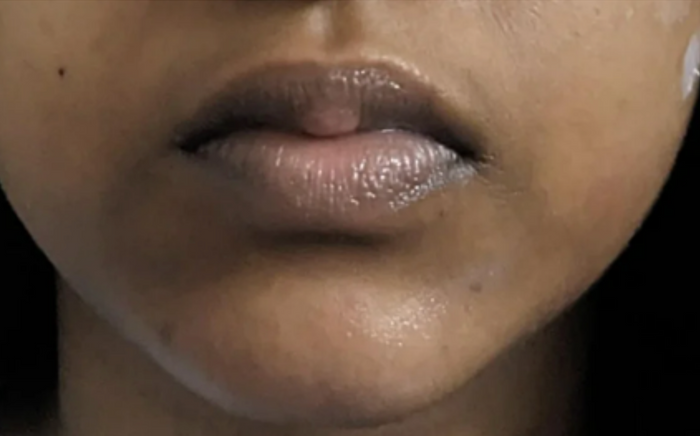
Quick Answer: Dry, chapped lips with painful cracks and fissures at the corners of the mouth — sometimes with burning and mild pigmentation — is commonly angular cheilitis with lip irritation. It often starts as irritation or allergy to lip products or toothpaste, and worsens with lip licking, saliva pooling, and sometimes secondary infection. First steps: stop all new lip products, apply a plain barrier ointment like petrolatum frequently, and use a daytime SPF lip balm. Cracked corners may need a dermatologist-prescribed antifungal or combination cream. Case Snapshot: A user wrote: "The corners/sides of my lips have been getting really dry, cracking, and there's a burning sensation too. Previously the entire area around my lips was burning as well. It started as small bumps around the lip line and now the sides are literally splitting when I open my mouth. I've been using lip balm but it's not really helping." Their images showed dry, chapped lips with mild pigmentation and fissures at the corners. What's Actually Happening This presentation combines two related problems. The lip irritation — dryness, chapping, burning, small bumps around the lip line — typically begins as irritation or allergy to lip products or toothpaste. The angular cheilitis — the painful splits at the corners — develops because the corners of the mouth are a uniquely vulnerable micro-environment: saliva pools there, constantly wetting and macerating the skin, and every yawn and bite re-tears the healing fissure. Once cracked, the moist corners readily pick up secondary infection — usually the yeast Candida, occasionally bacteria. Nutritional deficiencies (iron and B-vitamins) can also contribute, which is why stubborn cases get blood work. Why Lip Balm Alone Failed The patient's frustration — "lip balm isn't helping" — is diagnostic in itself. Flavoured and fragranced balms are among the most common triggers of lip allergy, so reapplying one can feed the very problem it's meant to soothe. And no balm can heal corners that are re-split at every meal and re-wetted by saliva; those need infection treated and the trigger removed. This is the classic loop: irritation → licking for relief → saliva worsens irritation → more licking. The Step-by-Step Plan ✔️ Stop all new lip products — every balm, tint, and lipstick started in recent months goes on pause ✔️ Plain barrier ointment (petrolatum), applied frequently — bland, allergen-free, and it physically shields the corners from saliva ✔️ Daytime lip balm with SPF — a simple, fragrance-free one, since UV worsens lip inflammation and pigmentation ✔️ Consciously break the lip-licking habit — the hardest and most important step ✔️ For cracked corners: a dermatologist may prescribe a short course of antifungal or combination cream to clear secondary infection ⚠️ Avoid strong steroid creams on the lips without medical advice — they thin this delicate skin and can worsen infections If It Keeps Coming Back Recurrent angular cheilitis is a signal, not bad luck. A dermatologist will look for a persistent allergen — allergy patch testing can identify a culprit ingredient in lip products or toothpaste — and screen for nutritional deficiencies (iron, vitamin B2, B6, B12) that impair healing. Denture wearers and those with deep mouth-corner folds have anatomical saliva-pooling that also needs addressing. Treating episodes without finding the driver guarantees the next episode. The Two-Week Reset Plan A practical schedule makes recovery concrete. Days 1–3: strip to petrolatum only, applied 6–8 times daily including after every meal and before bed; switch to a bland SLS-free toothpaste. Days 4–7: cracks should stop deepening and burning should ease; continue the ointment and add the SPF balm for daytime. Week 2: corners typically close; if fissures persist or crust returns, that's the cue for a prescription antifungal or combination cream rather than more waiting. Throughout, the silent saboteur to police is licking: many patients discover they lick their lips dozens of times an hour without noticing, especially while concentrating. A dab of petrolatum whenever the urge strikes replaces the habit with the treatment. When to See a Dermatologist See a dermatologist if the corners are split and painful, if burning has spread around the mouth, if bumps or scaling persist beyond two weeks of bland care, or if episodes keep recurring. Persistent lip changes with pigmentation also deserve examination to rule out other lip conditions. Book a consultation here. FAQs Q: Is angular cheilitis contagious? Not in the everyday sense — the yeast involved is a normal skin resident that overgrows in the moist crack. Treating the crack solves it. Q: Which toothpaste ingredients cause lip irritation? Flavouring agents (cinnamates, mint), and foaming agents like sodium lauryl sulphate are frequent culprits. Switching to a bland, SLS-free paste is a simple diagnostic test. Q: Why do my lip corners split every winter? Cold-weather dryness plus more lip licking is the perfect angular cheilitis recipe. Pre-emptive barrier ointment through winter usually prevents it. Q: Can vitamin deficiencies alone cause this? They can contribute and impair healing — which is why recurrent or non-healing cases get iron and B-vitamin testing alongside local treatment. 📌 Case Study Reference: Publicly shared patient images and query, r/IndianSkincareAddicts, Reddit — "My lips have been burning and drying up". Educational discussion only; not a final diagnosis. Clinical commentary by the Allodermis dermatology team.
Learn moreCase 20: Itchy Deep-Seated Blisters on the Fingers and Palms — Dyshidrotic Eczema, and Why Steroid Creams Sometimes Burn
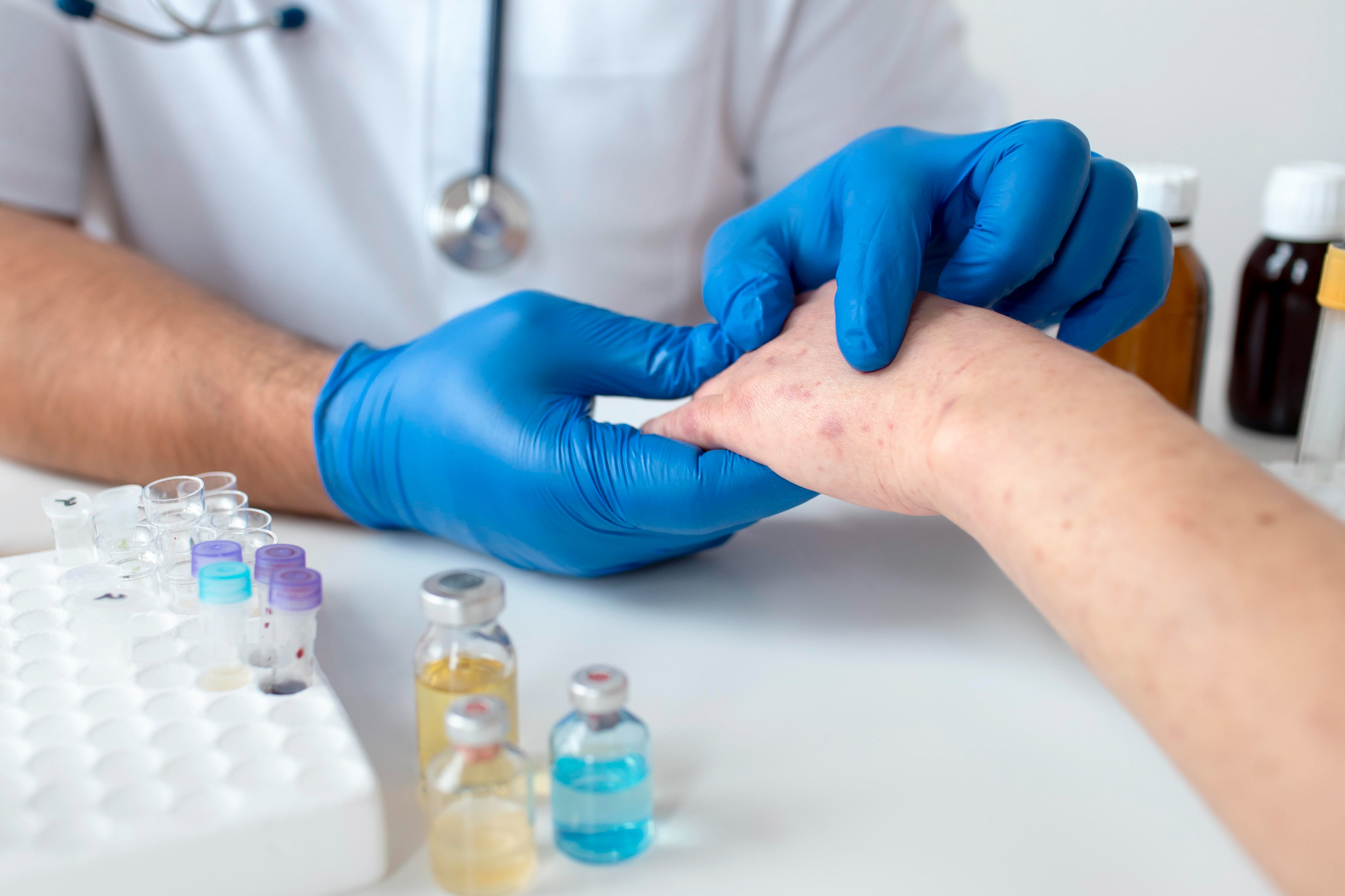
Quick Answer: Small, deep-seated, fluid-filled bumps on the sides of the fingers and palms with dryness, peeling, and intense itching indicate dyshidrotic eczema. If the skin barrier is damaged, steroid creams can sting or burn initially — this doesn't necessarily mean they're wrong, but the barrier needs repair alongside. Management combines thick regular moisturisers, short appropriate courses of topical steroids or tacrolimus, strict irritant avoidance with cotton-lined gloves, and trigger identification — sometimes via patch testing. The condition improves in cycles, not overnight. Case Snapshot: A patient on r/eczema wrote: "The doc keeps telling me I have dyshidrotic eczema that is resolving. I'm not seeing the resolution… The steroid creams burn. I use Dove soap only. I wear gloves when cleaning. Try not to wash hands. I don't scratch. Anyone experience this?" — a picture of someone doing many right things, yet stuck. What Is Dyshidrotic Eczema? Dyshidrotic eczema (pompholyx) presents as small, deep-seated, fluid-filled bumps along the sides of the fingers and on the palms, accompanied by dryness, peeling, and often intense itching. Vesicles emerge in crops, dry into peeling skin over days to weeks, and — frustratingly — recur in cycles. The "resolving" phase can genuinely look unimpressive: fresh crops may appear even as older ones fade, so the doctor and the patient can both be right at once. Why the Steroid Creams Burn This is the case's most valuable teaching point: if the skin barrier is damaged, steroid creams can sting or burn initially. Cracked, fissured eczematous skin has exposed nerve endings; almost anything applied to it — including correct treatment — can smart. Burning doesn't always mean the treatment is wrong; it means the skin needs to repair too. The practical fix is layered: moisturise intensively so the barrier recovers, apply steroids to intact rather than freshly cracked skin where possible, and discuss vehicle changes (ointments generally sting less than creams) with your dermatologist. Genuine worsening rash or spreading redness after application, however, warrants review for contact allergy — including, occasionally, allergy to a cream's own ingredients. The Trigger List Dyshidrotic eczema flares with: Frequent hand washing and wet work Sweating of the palms Detergents and cleaning chemicals Metals — especially nickel (taps, keys, jewellery, some foods in sensitive individuals) Stress — a consistently reported trigger Underlying atopic tendency The Management Bundle ✔️ Thick moisturisers, applied relentlessly — the single most important measure; after every hand wash and many times daily ✔️ Short, appropriate courses of topical steroids or tacrolimus during flares, as prescribed ✔️ Irritant avoidance done properly: cotton-lined gloves for wet work (rubber directly on skin traps sweat and worsens things), mild cleansers, minimal wet exposure ✔️ Trigger identification — when flares keep recurring despite good care, patch testing can uncover a contact allergen such as nickel or a preservative that has been silently refuelling the cycle The Mindset: Cycles, Not Cures This condition improves in cycles — not overnight — so patience matters. Success looks like flares becoming smaller, shorter, and further apart, not a single dramatic clearance. Tracking flares (photos plus a simple diary of exposures) turns vague frustration into usable data for your dermatologist. When to See a Dermatologist Return to your dermatologist if flares aren't settling or keep recurring — treatment may need adjusting (stronger or different anti-inflammatories, barrier-repair prescriptions) or triggers need formal work-up. Painful cracking, pus, or spreading redness needs prompt review for secondary infection. Book a hand-eczema consultation. FAQs Q: Is dyshidrotic eczema contagious? No — the blisters contain inflammatory fluid, not infection, and cannot spread to others. Q: Why does it keep coming back even though I avoid scratching? Recurrence is the condition's nature, driven by barrier fragility and triggers (wet work, sweat, metals, stress). Reducing triggers shrinks the cycles; patch testing finds hidden ones. Q: Can I pop the blisters for relief? No — deroofing invites infection and slows healing. Cool compresses and prescribed treatment manage the itch more safely. Q: Does diet play a role? Only in a minority — chiefly nickel-sensitive patients, where a dermatologist may discuss dietary nickel after positive patch testing. Routine elimination diets aren't recommended. A Hand-Protection Routine for Flare-Free Weeks Between flares is when the battle is actually won. Station moisturiser everywhere — kitchen sink, bathroom, desk, bag — because the treatment that works is the one within arm's reach after every wash. Choose ointments at night: a thick layer under cotton gloves overnight during rough patches rebuilds the barrier faster than daytime creams alone. Engineer the wet work: batch dishwashing into one gloved session rather than many bare-handed rinses; use lukewarm, not hot, water; and replace cotton glove liners when damp, since a sweaty liner defeats its purpose. Mind the invisible exposures: raw vegetable juices (onion, garlic, citrus), sanitiser gels, and coin/key handling in nickel-sensitive patients all count as contact even though none feels like "cleaning." Track your pattern: a two-line daily note — flare yes/no, notable exposures — turns three months of frustration into a trigger list your dermatologist can act on. Patients who adopt this unglamorous scaffolding routinely find their steroid use falling, not because the eczema was mild, but because the skin finally gets uninterrupted weeks in which to heal. 📌 Case Study Reference: Publicly shared patient query, r/eczema, Reddit — "The doc keeps telling me I have dyshidrotic eczema that is resolving…". Educational discussion only; not a final diagnosis. Clinical commentary by the Allodermis dermatology team.
Learn moreCase 19: White Patches Above the Eyebrows — Pityriasis Alba, and the Light Patches That Must Not Be Missed
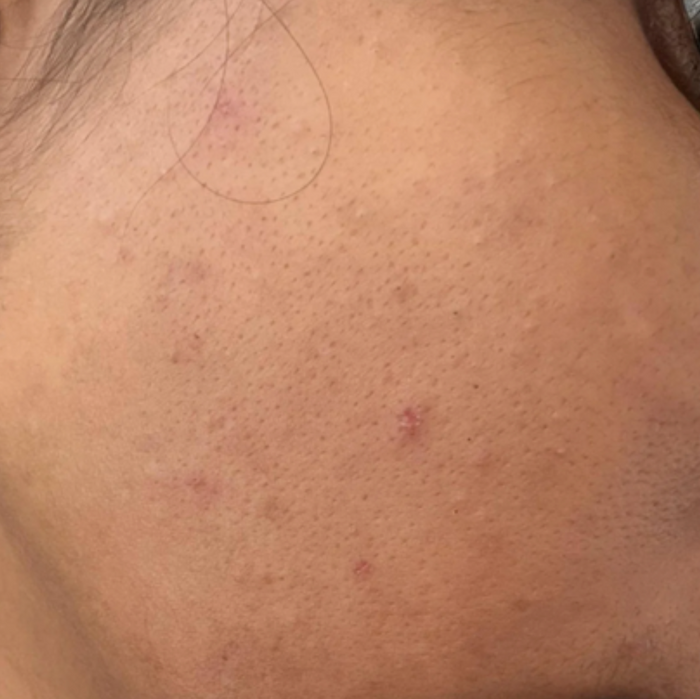
Quick Answer: Light-coloured patches on the forehead with minimal surface change — especially in people with dry or atopic skin — are commonly pityriasis alba, a mild eczema-related hypopigmentation. Treatment centres on gentle moisturisation, photoprotection, and dermatologist-guided creams such as tacrolimus or pimecrolimus. However, not every light patch is pityriasis alba: vitiligo, post-inflammatory hypopigmentation, and even leprosy sometimes need to be ruled out. Case Snapshot: A user asked: "These white patches are appearing above my eyebrows… what could be the reason? Should I stop applying anything on my skin?" Their images showed light-coloured patches over the forehead with very minimal surface change — subtle scaling at most. What Is Pityriasis Alba? Pityriasis alba is a mild form of eczema-related hypopigmentation, most common in children and young people with dry or atopic skin. Low-grade eczema subtly inflames patches of skin; as that inflammation settles, the affected melanocytes temporarily underproduce pigment, leaving pale, slightly dry patches — typically on the face, and often first noticed after sun exposure darkens the surrounding skin and heightens the contrast. Key reassurance: it is not an infection, not contagious, and not a fungus — and it does not signal poor hygiene. The Treatment Approach Gentle, consistent moisturisation — emollients treat the underlying dryness/eczema tendency that drives the condition Photoprotection — daily sunscreen reduces the tanning of surrounding skin that makes patches conspicuous, and protects the recovering patches Dermatologist-guided creams: tacrolimus or pimecrolimus — non-steroid anti-inflammatory creams that calm the eczema component and help the skin gradually regain its normal tone Avoid harsh products on the area — aggressive actives and scrubs prolong the cycle Repigmentation is genuinely gradual — typically weeks to months — and patience plus emollients outperform any aggressive intervention. The Differentials That Matter The critical teaching point of this case: not every light patch is pityriasis alba. A dermatologist actively distinguishes it from: Vitiligo — milk-white, sharply demarcated depigmentation (complete pigment loss, not just reduction) that behaves and treats entirely differently Post-inflammatory hypopigmentation — pale patches at the exact sites of a previous rash, injury, or steroid-cream use Pityriasis versicolor — a superficial yeast overgrowth with fine branny scaling, common on the face in younger patients Leprosy — in endemic regions, any pale patch with reduced or absent sensation must be examined for this; early detection changes everything Simple bedside tools — examination of scale, Wood's lamp assessment, sensation testing, and occasionally a skin biopsy — separate these confidently. This is precisely why self-diagnosing white patches from internet photos is risky. Answering the Patient's Actual Question "Should I stop applying everything?" — Pause harsh actives on the area, yes; but do not stop moisturiser and sunscreen, which are the treatment. If any recently started product coincided with the patches, mention it at consultation; contact irritation can produce pale patches too, and patch testing can settle the question. When to See a Dermatologist See a dermatologist promptly if patches are pure white rather than pale, sharply bordered, spreading, numb, scaly, or simply not improving after 6–8 weeks of moisturiser and sunscreen. Confirming the diagnosis early is far more valuable than months of guessing. Book an evaluation. FAQs Q: Will the white patches become permanent? Pityriasis alba characteristically repigments fully over weeks to months with emollient care. Persistent or spreading patches deserve re-evaluation for the differentials above. Q: Is this early vitiligo? Usually not — pityriasis alba is pale and slightly dry; vitiligo is stark white and sharply bordered. Because early cases can look similar, in-person examination (often with Wood's lamp) is the reliable way to tell. Q: Can sun exposure cure the patches by "tanning them back"? No — sun darkens surrounding skin more than the patches, worsening the contrast, and adds UV damage. Sunscreen actually makes patches less visible over time. Living With the Patches While They Recover Because repigmentation is measured in months, a simple monitoring habit keeps everyone sane. Photograph the patches monthly in the same light and position — steady improvement, however slow, confirms the diagnosis is behaving as expected, while any patch that whitens further, sharpens its border, or spawns new siblings earns a re-visit. Keep the routine boring: fragrance-free moisturiser twice daily and sunscreen every morning; resist the urge to rotate through brightening serums, which mostly irritate recovering patches. For parents of affected children — pityriasis alba peaks in school-age kids with dry or atopic skin, and questions from classmates often distress the child more than the patches do. The honest, useful script: "It's a mild dry-skin condition, it's not catching, and it fades on its own with cream." Managing the child's eczema tendency overall (gentle bathing, regular emollients) shortens the episode and prevents the next one. Above all, avoid the two common errors: steroid creams borrowed from another prescription (facial skin thins easily) and antifungal creams bought on a guess — both muddy the picture if a dermatologist later needs to examine untreated skin. 📌 Case Study Reference: Publicly shared patient images and query, r/IndianSkincareAddicts, Reddit — "White patches". Educational discussion only; not a final diagnosis. Clinical commentary by the Allodermis dermatology team.
Learn moreCase 18: Large Open Pores, Acne Scars and Early Forehead Lines Together — Building a First Skincare Routine That Works
Quick Answer: Enlarged pores with old acne scars suggest oily skin with past acne-related collagen damage, while resting forehead lines point to early skin ageing from sun damage and repeated expressions. The evidence-based starter routine: salicylic acid face wash, night tretinoin started low (0.025% for one hour, slowly titrated up), moisturiser, and broad-spectrum morning sunscreen. Deep ice-pick and rolling scars additionally need procedures such as TCA CROSS, microneedling, subcision, or lasers. Case Snapshot: A patient wrote: "I have large open pores, acne scars, and visible forehead lines even when my face is relaxed. I've never really used skincare before — just a face wash sometimes. Can you suggest a simple routine?" Their images showed all three concerns coexisting — a very common combination in oily Indian skin entering the late 20s and 30s. Reading the Three Concerns Together Enlarged pores + old scars tell one story: historically oily, acne-prone skin whose past inflammation damaged collagen around follicles — enlarging pore openings and leaving pitted scars. Forehead lines at rest tell another: early ageing, driven by cumulative sun damage degrading collagen and repeated facial expressions etching lines in — accelerated when no sunscreen has ever been used. The elegant part: the same core routine addresses all three, because retinoids and sunscreen act on collagen, the common thread. The Starter Routine — Simple by Design ✔️ Salicylic acid face wash — controls oil and keeps pores clear ✔️ Night tretinoin, started low: 0.025%, applied for one hour then washed off, a few nights weekly — then slowly titrated to higher concentrations and longer/overnight contact as tolerance builds. Tretinoin improves pores, texture, and fine lines simultaneously. ✔️ Moisturiser — protects the barrier so tretinoin stays tolerable ✔️ Broad-spectrum sunscreen every morning — prevents worsening of lines, pores, and scar pigmentation; for a lifelong non-user, this is the single highest-impact new habit Four products. No twelve-step routine required — consistency with these outperforms complexity. What the Routine Can and Cannot Fix Topicals will refine pores, smooth texture, soften early lines, and prevent progression. But deep ice-pick and rolling scars involve structural collagen loss and usually need procedures for visible improvement: TCA CROSS for ice-pick scars Subcision for tethered rolling scars Microneedling / MNRF for overall remodelling Fractional lasers for finishing texture Explore the complete options on our acne scar treatment and open pores pages. For the forehead lines specifically, once topicals plateau, targeted options exist within our anti-ageing treatments — from collagen-stimulating procedures to Botox for expression lines, chosen case-by-case. Sequencing the Journey Months 0–3: establish the four-step routine; build tretinoin tolerance Months 3–6: skin visibly refines; reassess which scars still bother you Months 6+: targeted procedures for residual deep scars and lines, on calm, retinised, sun-protected skin — which responds better and pigments less after procedures When to See a Dermatologist Starting tretinoin is best done with guidance — strength, titration speed, and irritation management are individual. And scar procedures always begin with an in-person scar-mapping assessment. Book a consultation to have the full plan sequenced for your skin. FAQs Q: Why start tretinoin for only one hour? Short-contact application lets never-treated skin adapt with minimal irritation; contact time and strength are then increased stepwise — same destination, gentler road. Q: Can forehead lines at my age really be reversed? Early lines soften considerably with tretinoin plus sunscreen; established resting lines may additionally need in-clinic treatment. Prevention from today is fully in your control. Q: How long before pores look smaller? Expect visible refinement at 8–12 weeks of consistent retinoid use, continuing to improve over months. Q: Can I use tretinoin and salicylic acid on the same day? Yes — the salicylic wash in the morning or as a rinse-off, tretinoin at night. Avoid layering leave-on acids directly with tretinoin in the early months to keep irritation manageable. Making Tretinoin Succeed on Never-Treated Skin Since this patient has essentially virgin skin, a few practicals decide whether tretinoin becomes a lifelong ally or a two-week failure. Apply to bone-dry skin — wait 15–20 minutes after washing, as damp skin absorbs more and stings more. Use a pea-sized amount for the whole face; dabbing extra on scars doesn't speed results, it just inflames. Buffer early: moisturiser before and after the tretinoin hour softens the landing. Expect the adjustment phase — mild flaking and a possible brief purge in weeks 2–6 are the skin adapting, not failing (see our retinoid dermatitis case for the full map). Protect the investment: every skipped sunscreen morning hands back a slice of the collagen tretinoin is building. Titration milestones — moving from one-hour contact to overnight, then from 0.025% upward — should be crossed only when the current step feels boring and uneventful, which is precisely the sign of readiness. 📌 Case Study Reference: Publicly shared patient images and query, r/IndianSkincareAddicts, Reddit — "Help me — I've large open pores and acne scars". Educational discussion only; not a final diagnosis. Clinical commentary by the Allodermis dermatology team.
Learn moreCase 17: Depressed Areas and Uneven Texture at Under 20 — Acne Scarring in Young Skin, and Why Early Treatment Matters
Quick Answer: Multiple depressed areas with uneven skin texture following acne indicate atrophic acne scarring — collagen loss from deep inflammation, often worsened by picking. Up to 90% of acne patients develop some scarring and about 22% develop significant scarring, which is why early, adequate acne therapy is the single best prevention. Established scars — rolling, ice-pick, boxcar, and linear types — improve with procedures such as TCA CROSS, subcision, microneedling, and lasers. Case Snapshot: A user under 20 shared images showing multiple depressed areas and overall uneven facial texture. Notably, they reported using no face wash (soap only), no sunscreen, and no moisturiser — washing with soap, icing the face, and applying a single gel. The images showed scarring as a sequela of acne that had never received adequate treatment. How Scars Formed So Young Acne scarring is not an "older person's problem" — it is a timing problem. When acne inflammation reaches the deeper skin layers — either spontaneously in severe lesions or as a result of trauma from picking — it damages the collagen housed there. The skin then heals with either too little collagen (depressions) or occasionally too much (raised scars). A teenager with untreated inflammatory acne and a picking habit can accumulate significant scarring within a couple of years. The Statistics That Should Change Behaviour Up to 90% of acne patients develop some degree of scarring Around 22% suffer significant scarring The strongest modifiable factors: delay in treatment and picking Read together, these numbers make the case plainly: early and adequate therapy is advocated to minimise subsequent scarring. Treating acne promptly is not vanity — it is prevention of permanent structural damage. Know Your Scar Types Scars from collagen loss (atrophic) include: Ice-pick: narrow, deep pits Boxcar: broader depressions with defined edges Rolling: shallow undulations tethered from below Linear: line-like depressions Scars from collagen overproduction are raised (hypertrophic/keloidal). Most faces show a mixture, and treatment is matched scar-by-scar — the core principle of our acne scar treatment programs. The Foundation This Patient Was Missing Before any scar procedure, the basics must exist — and this case had none: A proper cleanser instead of soap (soap's high pH strips and irritates facial skin) A non-comedogenic moisturiser to maintain the barrier Daily sunscreen — unprotected sun both worsens acne marks and degrades the collagen that scar treatment tries to rebuild Evidence-based acne control — typically a salicylic acid wash plus a night retinoid — to stop new scars forming while old ones are treated. See our acne treatment page and full guide to scar treatment options and timelines. Treating the Established Scars Once active acne is controlled, procedures rebuild what inflammation removed: TCA CROSS for ice-pick scars, subcision for rolling scars, microneedling and MNRF for broad texture, and fractional lasers for refinement — usually in combination over 3–8 sessions across 6–12 months. Young skin, encouragingly, remodels collagen especially well. When to See a Dermatologist If you are a teenager or young adult with recurring inflammatory acne — especially with any picking habit — see a dermatologist now; this is the highest-leverage moment of your skin's life. If scarring already exists, book a scar-mapping consultation to sequence acne control and procedures correctly. Schedule here. FAQs Q: I'm under 20 — am I too young for scar procedures? Age is less important than having active acne controlled first. Many procedures are appropriate for older teens under dermatologist supervision, and young skin responds excellently. Q: Can ice reduce acne or scarring? Ice may briefly calm an inflamed pimple's swelling but does nothing for acne biology or scars. It is not a treatment substitute. Q: Is soap really that bad for the face? Traditional soap is alkaline and stripping; facial skin does better with pH-balanced gentle cleansers, particularly acne-prone skin on actives. A Note for Students and Parents The pattern in this case — soap-only cleansing, no sunscreen, no treatment, active picking — is the default state of most teenagers' skincare, and it is precisely the profile that produces lifelong scarring. Three low-cost interventions change the trajectory: a basic three-product routine (gentle cleanser, light moisturiser, sunscreen — under a few hundred rupees monthly), a firm no-picking rule framed as scar prevention rather than nagging, and one dermatologist visit the moment breakouts become inflamed or recurrent, since prescription adapalene and similar first-line treatments are inexpensive and dramatically effective at this age. For parents: acne in a teenager is a medical condition with a 90% scarring statistic attached, not a phase to be waited out with home remedies. And for young patients themselves — the scars visible in this case are treatable, but the pimples you don't pick this year are scars you never have to treat at all. That asymmetry, more than any product recommendation, is the message worth internalising early. 📌 Case Study Reference: Publicly shared patient images and query, r/IndianSkincareAddicts, Reddit — "Product suggestions plzzz" (under-20 user; soap-only routine). Educational discussion only; not a final diagnosis. Clinical commentary by the Allodermis dermatology team.
Learn moreCase 16: Red Bumps and Pus Points After New Skincare — Cosmetic Acne and Overuse of Actives
Quick Answer: Multiple red raised bumps with pus points on a rough, dry background — appearing after new products — usually indicates cosmetic acne or irritation from overusing actives and pore-clogging products. The best first step is to stop all actives (acids, scrubs, retinol, heavy creams) and strip the routine down to a gentle cleanser, non-comedogenic gel moisturiser, and sunscreen until the barrier calms. Recurring product-triggered breakouts may need dermatologist-guided patch testing or ingredient review. Case Snapshot: A user on r/IndianSkincareAddicts shared images of their lower face showing multiple red raised bumps and a few pus-point lesions on a rough, dry-looking background, asking what had gone wrong with their skin — a picture that strongly suggested the skincare routine itself was the culprit. When Skincare Becomes the Problem Two overlapping mechanisms produce this presentation: Cosmetic acne: comedogenic (pore-clogging) ingredients in creams, oils, and makeup silently block follicles, which then inflame into red bumps and pustules — often concentrated on the lower face and jawline where products accumulate. Active overuse / barrier damage: stacking acids, scrubs, retinol, and strong actives — especially several new ones at once — strips the skin barrier. The result is the paradox in this image: skin that is simultaneously dry, rough, AND breaking out, because a damaged barrier is both dehydrated and inflamed. The Rescue Protocol: Less Is the Treatment Stop all active products immediately — acids (AHA/BHA), scrubs, retinol, vitamin C, and heavy occlusive creams Keep only three things: a gentle cleanser, a non-comedogenic gel moisturiser, and sunscreen Hold this minimal routine for 2–4 weeks — the barrier repairs, inflammation subsides, and the true state of the skin reveals itself Reintroduce products one at a time, two weeks apart, so any culprit identifies itself Resist spot treatments and new purchases during rescue — every addition muddies the picture The 'Non-Comedogenic' Fine Print An important lesson from this case: even products labelled 'non-comedogenic' can irritate or break out certain skin types. The label reflects testing conventions, not a guarantee for your individual skin. The same is true of "natural," "dermatologist-tested," and "for sensitive skin." Your skin's response — not the label — is the final authority, which is why single-variable reintroduction matters. Finding the Trigger When It Keeps Recurring If breakouts return with specific products despite careful reintroduction, formal detective work helps: a dermatologist can perform patch testing to identify contact allergens, and conduct an ingredient review of everything touching your face — skincare, makeup, hair products, even pillowcase detergents. Identifying one culprit ingredient often explains years of "sensitive, breakout-prone skin." Rebuilding a Routine That Works Once calm, most skin thrives on remarkably little: cleanser, moisturiser, sunscreen, plus one targeted active introduced slowly — for acne-prone skin, typically a retinoid at night under guidance. Our clinic builds these stepwise plans routinely as part of acne and pimple treatment; the full logic is laid out in Acne Treatment Explained. When to See a Dermatologist See a dermatologist if the rescue routine hasn't calmed things within 3–4 weeks, if pustules are spreading or painful, or if every reintroduction attempt triggers a flare. Persistent "product reactions" sometimes turn out to be different conditions altogether — perioral dermatitis, fungal folliculitis, or rosacea — each needing specific treatment. Book an assessment. FAQs Q: How quickly does cosmetic acne appear after using a product? Comedogenic breakouts build over 2–8 weeks of use — which is why the culprit is rarely the newest product alone. Irritant reactions can appear within days. Q: Should I exfoliate the rough texture away? No — the roughness is barrier damage, not dead-skin buildup. Exfoliating a damaged barrier deepens the problem. Moisture and time repair it. Q: Can I wear makeup during the rescue phase? Minimise it; if needed, use non-comedogenic formulations and remove gently with the same bland cleanser. Q: How do I know my barrier has recovered? The tell-tale signs reverse: tightness after washing fades, moisturiser stops stinging, the rough texture smooths, and redness settles. That stability — usually 2–4 weeks in — is your green light to reintroduce one product. The Conditions That Masquerade as 'Product Breakouts' Part of a dermatologist's value in cases like this is recognising when the picture isn't cosmetic acne at all. Perioral dermatitis — clustered small bumps around the mouth and chin — classically flares with heavy creams and steroid use, and worsens if treated like ordinary acne. Fungal (Malassezia) folliculitis produces uniform itchy bumps that actively worsen with anti-acne oils and some moisturisers, responding instead to antifungals. Rosacea brings background redness and sensitivity that actives inflame. Each of these is routinely mislabelled "sensitive, acne-prone skin reacting to products," and each has a specific, effective treatment once named. Clues that point away from simple cosmetic acne: itching more than pain, uniform same-sized bumps, dramatic flushing, or a distribution hugging the mouth. If your "product reactions" have persisted through multiple routine resets, the smart move is a diagnosis, not another minimalist restart — that examination is precisely what a clinic consultation provides. 📌 Case Study Reference: Publicly shared patient images and query, r/IndianSkincareAddicts, Reddit — "My face condition". Educational discussion only; not a final diagnosis. Clinical commentary by the Allodermis dermatology team.
Learn moreCase 15: 'Strawberry Skin' on Arms and Shoulders — Keratosis Pilaris with Pigmented Dots
Quick Answer: Rough bumps with dotted pigmentation on the arms and shoulders — often called strawberry skin or chicken skin — are keratosis pilaris: a very common, harmless condition where dead skin blocks hair follicles. Treatment is consistent moisturisation plus keratolytic body lotions containing urea (10%+), lactic acid (~12%), glycolic acid (6–12%), or salicylic acid (2%+). Gentle chemical exfoliation and patience are the keys; harsh scrubbing makes it worse. Case Snapshot: A user asked for product help with "chicken skin" on the arms and shoulders — tiny rough bumps studded with dark dots that gave the surface a strawberry-like, stippled appearance. What Creates the 'Strawberry' Look? Keratosis pilaris (KP) begins when keratin — dead skin protein — plugs the hair follicle openings, raising tiny rough bumps. Around each plugged follicle, low-grade inflammation and friction leave a dot of post-inflammatory pigmentation. Hundreds of these pigmented follicular dots together create the dotted, strawberry-skin appearance — a combination of texture (the bumps) and colour (the dots), each needing its own timeline to resolve. Why It Happens — and Flares Genetics: KP runs strongly in families as an inherited keratinisation tendency Dry skin and winter weather — the classic seasonal flare Harsh soaps stripping the barrier Friction from clothing, backpack straps, and tight sleeves Shaving/waxing trauma on affected areas, which adds ingrown hairs and more pigment The Evidence-Based Routine Moisturise consistently — twice daily minimum; this alone softens a large share of cases Keratolytic body lotions with urea 10% or more, lactic acid ~12%, glycolic acid 6–12%, or salicylic acid 2%+ — these dissolve the plugs chemically and smooth texture over 4–8 weeks Gentle cleansing: lukewarm showers, soap-free wash, no loofahs on affected zones Apply actives right after bathing, when skin is most receptive Consistency over intensity — KP responds to steady chemistry, not aggressive campaigns Clearing the Dots The pigmented dots fade after the bumps are controlled and friction stops — typically lagging the texture improvement by weeks to months. Where dots persist, dermatologist-supervised options help: gentle body chemical peels for pigment turnover, and where coarse hair and ingrowns contribute to the appearance, laser hair reduction removes both the shadowing and the shaving trauma in one stroke. Persistent redness-dominant KP may benefit from additional in-clinic measures after evaluation. What Makes It Worse Vigorous scrubbing — inflames follicles, deepens the dots Hot showers — strip lipids and heighten dryness Picking at bumps — converts subtle dots into obvious marks Stopping treatment once smooth — KP is a tendency, not an infection; maintenance keeps it away When to See a Dermatologist Consult a dermatologist if bumps are itchy, red, spreading, or unresponsive to 6–8 weeks of proper keratolytic care, or if you're unsure whether it is truly KP — folliculitis and eczema mimic it and need different treatment. Book a body-skin consultation for prescription-strength options and a maintenance plan. FAQs Q: Can strawberry skin be permanently cured? There's no permanent cure for the tendency, but the appearance can be controlled to near-invisibility with maintenance moisturisation and periodic keratolytics. Q: How long until my arms look smooth? Texture typically improves within 4–8 weeks of consistent care; the pigmented dots fade over the following months. Q: Does diet affect keratosis pilaris? No strong dietary link is established. Skin hydration and topical keratolytics remain the effective levers. Q: Is it safe to shave over KP? Shaving adds friction and ingrowns. If hair removal matters to you, laser reduction is kinder to KP-prone skin than repeated razors or wax. How to Read a Body-Lotion Label for KP The pharmacy shelf becomes simple once you know what to scan for. First, the active and its percentage: urea at 10% or higher, lactic acid around 12%, glycolic acid 6–12%, or salicylic acid 2% or more — products that name an active but hide the percentage are usually under-dosed. Second, the base: a cream or rich lotion base suits KP better than a light gel, since hydration is half the treatment. Third, what to avoid: fragrance-heavy formulas (irritation), gritty "exfoliating" beads (friction — the enemy), and menthol/cooling agents that sting compromised follicles. One active is enough — stacking a urea lotion over a glycolic lotion over a salicylic wash multiplies irritation, not results. Pick one keratolytic product, pair it with a bland moisturiser, and give the combination its full 4–8 weeks before judging. If two well-chosen products at proper strengths have failed over two months, the next step isn't a third product — it's a dermatologist visit for prescription-strength keratolytics and a look at whether the diagnosis is truly KP. 📌 Case Study Reference: Publicly shared patient image and query, r/IndianSkincareAddicts, Reddit — "Chicken skin on my arms and shoulders — product?" (image post). Educational discussion only; not a final diagnosis. Clinical commentary by the Allodermis dermatology team.
Learn more